
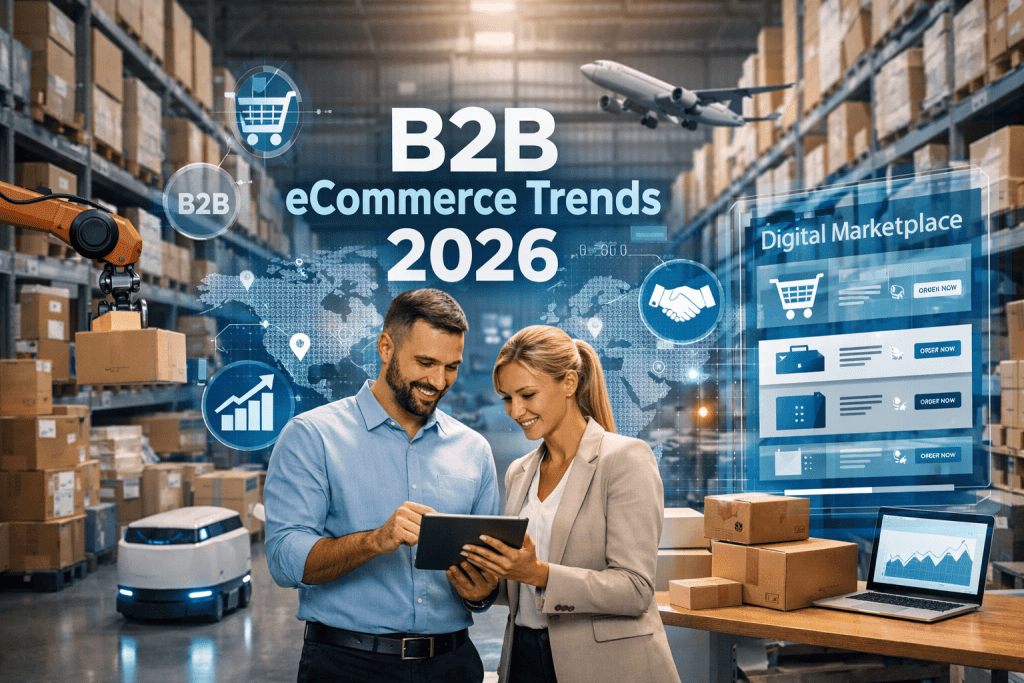

Wholesale buying used to run on phone calls, printed catalogs, and long email threads that never quite told the full story. Today, a purchasing manager can place a six figure order from a tablet while waiting for coffee. That shift did not happen overnight, and it is not slowing down. By 2026, digital buying will define how wholesale businesses win or lose deals.
If you sell to other businesses, the question is no longer whether digital matters. It is how fast you can adapt to the new reality shaping b2b ecommerce trends.
Buyers don’t just like online ordering anymore — they expect it. According to Gartner, “80 percent of B2B sales interactions are now happening through digital channels, with self-serve commerce and online transactions driving real business growth.”
Why B2B Buying No Longer Looks “B2B”
Modern buyers grew up shopping on Amazon, Shopify, and niche DTC brands. They expect that same clarity and speed when buying bulk inventory or negotiating recurring contracts. When a wholesale portal feels clunky, buyers notice. When pricing is unclear, they move on.
This behavior sits at the heart of b2b digital commerce. Buyers want independence. They want answers without waiting. They want systems that respect their time.
Wholesale brands that still rely on manual quotes and back and forth approvals feel outdated, even if their products are excellent.
B2B eCommerce Trends Defining 2026
The future of wholesale is not about flashy tech. It is about practical improvements that make buying easier, smarter, and faster.
Self Service Portals Become the Default
Buyers want to log in, see custom pricing, reorder in seconds, and track shipments without calling anyone. Self service is no longer a bonus feature. It is expected.
By 2026, most successful online b2b sales platforms will offer role based access, account level pricing, and quick reorder tools. Wholesalers who invest here reduce sales friction and free their teams to focus on high value relationships.
Personalization Moves Beyond First Names
Personalization used to mean adding a company name to an email. Now it means showing the right products, pricing, and recommendations based on buying history and industry.
Wholesale ecommerce trends point toward AI driven personalization that feels helpful, not intrusive. A buyer logging in sees products relevant to their seasonal demand. That relevance builds trust and shortens sales cycles.
Also Read – How to Build a Successful Online Store Guide for 2026
Mobile Purchasing Becomes Serious Business
Mobile orders are no longer limited to emergencies. Decision makers approve purchases on phones between meetings. If your platform struggles on mobile, you lose credibility.
Optimized mobile UX is a quiet but powerful part of b2b ecommerce trends. Fast load times, clean navigation, and simple checkout flows directly impact conversion rates.
Integrated Systems Replace Disconnected Tools
Disconnected ERPs, CRMs, and ecommerce platforms create delays and errors. Buyers notice when inventory numbers are wrong or invoices take days to arrive.
By 2026, the future of b2b belongs to brands with deeply integrated systems. Real time inventory, automated invoicing, and synced customer data improve internal efficiency and customer confidence.
This is where strong Ecommerce development services play a strategic role, not just a technical one.
Content Supports Sales, Not Just Marketing
Wholesale buyers research before reaching out. They read guides, compare specs, and validate suppliers quietly.
Educational content that answers real questions supports the entire buying journey. Product comparison tools, industry specific use cases, and detailed FAQs reduce hesitation and position your brand as a reliable partner.
Trust Signals Matter More Than Ever
In wholesale, risk feels bigger. Orders are larger. Relationships last longer. Buyers look for signals that confirm reliability.
Clear return policies, transparent pricing structures, visible certifications, and real client testimonials build confidence. In 2026, trust is not assumed. It is earned digitally before the first conversation.
Brands investing in Ecommerce Marketing services that focus on credibility, not hype, see stronger lead quality and longer retention.
What This Means for Wholesale Business Owners
If you run or manage a wholesale operation, these b2b ecommerce trends offer a clear message. Digital transformation is not about replacing relationships. It is about supporting them.
A well built platform gives your sales team leverage. It allows buyers to move at their own pace while keeping your brand top of mind. It also provides data that helps you predict demand, optimize pricing, and identify growth opportunities.
Businesses that wait risk falling behind competitors who already meet modern expectations.
Also Read – What Is WooCommerce? Top Trends Shaping WordPress Ecommerce in 2026
Preparing Your B2B Store for 2026
Start with honest evaluation. Does your current ecommerce setup simplify buying or complicate it? Can buyers find what they need in under a minute? Can your team easily manage pricing and accounts?
Improving online b2b sales does not require a full rebuild overnight. Strategic upgrades, guided by experienced partners, deliver steady results.
Platforms built with scalability, flexibility, and buyer psychology in mind will define the next phase of wholesale success.
Final Thoughts
The future of b2b is not distant. It is unfolding right now in the buying habits of your customers. B2B ecommerce trends for 2026 point toward smarter systems, better experiences, and stronger digital trust.
Wholesale brands that embrace this shift will not just keep up. They will lead.
If your business is ready to refine its digital presence or rethink how it sells online, now is the time to act. The right strategy today sets the foundation for growth tomorrow.
FAQs
1. What are the biggest b2b ecommerce trends for 2026?
Ans. Self service buying, personalized pricing, mobile optimization, system integration, and trust focused content are leading the shift.
2. Why is b2b digital commerce growing so fast?
Ans. Buyers expect convenience, speed, and transparency similar to consumer shopping experiences.
3. How can wholesale businesses improve online b2b sales?
Ans. Focus on user experience, accurate data, personalized accounts, and content that supports decision making.
4. Is mobile really important for wholesale ecommerce?
Ans. Yes. Many buyers research and approve orders on mobile devices, making optimization essential.
5. What role does ecommerce development play in the future of b2b?
Ans. Strong development ensures scalable platforms, seamless integrations, and buyer friendly experiences that drive long term growth.
