
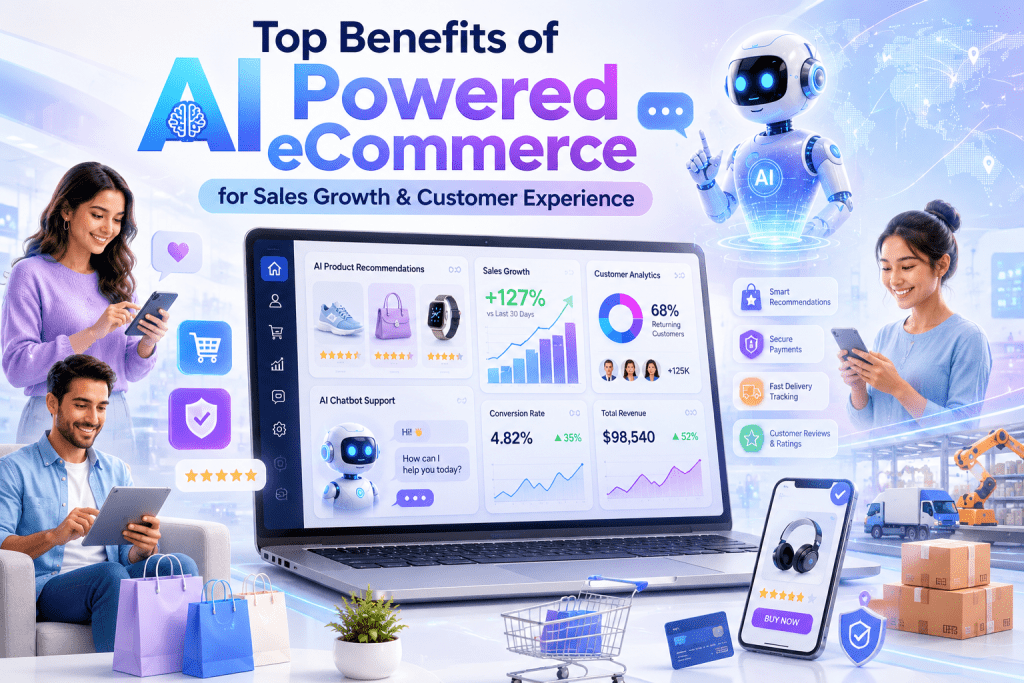

Online stores are no longer judged only by price or product range. Shoppers judge how fast pages load, how relevant suggestions feel, and whether the brand seems to understand them. That shift is why AI Powered eCommerce has quietly moved from a nice add on to a serious sales driver. Brands using it are not just selling more. They are building experiences customers want to return to.
If you run or manage an online store, you have probably noticed one thing. Customer expectations rise faster than most teams can keep up with manually. AI fills that gap in a very practical way.
Why AI Powered eCommerce Is Reshaping Online Selling
AI Powered eCommerce uses data patterns to make smarter decisions in real time. It looks at what shoppers browse, buy, abandon, and search for. Then it acts on that information instantly.
Think of it as a highly observant sales associate who never forgets a preference and never takes a day off. That kind of consistency changes how customers experience your store and how often they buy.
AI in eCommerce and Sales Growth Go Hand in Hand
Smarter product discovery that boosts conversions
Most shoppers leave because they cannot find what they want fast enough. AI in ecommerce fixes this by learning search behavior and browsing habits.
When someone types a vague query or misspells a word, AI still understands intent. Product discovery becomes smoother, which means fewer exits and more completed purchases. This directly supports ecommerce growth without increasing ad spend.
Dynamic pricing and inventory decisions
AI does not guess. It analyzes demand, seasonality, competitor pricing, and buying behavior. That allows stores to adjust prices and inventory levels in ways that protect margins while staying competitive.
For sales teams, this feels like having a data analyst working around the clock, except faster and more accurate.
Personalized Shopping That Feels Natural
AI recommendations that actually make sense
Shoppers can spot generic recommendations instantly. AI recommendations go deeper by using real behavior instead of surface level categories.
A returning customer might see items that match their style, budget, or past purchases. A first time visitor might see trending products relevant to their location or browsing path. That relevance increases average order value without feeling pushy.
Tailored content across the entire journey
Personalized shopping goes beyond products. AI customizes homepage layouts, email timing, promotional offers, and even messaging tone.
The result feels less like marketing and more like a helpful nudge at the right moment. Customers respond better because it feels human, not automated.
Also Read – 6 Proven Marketing Strategies for Your Auto Shop Business
AI Customer Experience That Builds Trust
Instant support without sounding robotic
AI chatbots today are nothing like the scripted ones shoppers used to avoid. They understand context, intent, and urgency.
When a customer asks about shipping delays or return policies, AI responds accurately and instantly. More complex issues get routed to human agents with full context. That blend improves response time and customer satisfaction.
Predictive help before problems start
AI customer experience tools can flag potential issues before customers complain. Late shipments, repeated failed payments, or confusing navigation patterns trigger proactive support.
When customers feel taken care of before they ask, trust grows naturally.
Operational Efficiency That Fuels Ecommerce Growth
Marketing spend that works harder
AI analyzes which channels convert, which messages resonate, and which audiences are most profitable. This helps brands refine campaigns instead of spreading budgets thin.
Teams offering Ecommerce Marketing services often rely on AI insights to fine tune targeting and creative decisions. The payoff shows in stronger ROI and cleaner data.
Automation that frees your team
From order processing to fraud detection, AI handles repetitive tasks quickly and accurately. Your team gets more time to focus on strategy, partnerships, and creative growth initiatives.
Efficiency at this level is a quiet advantage that compounds over time.
Real World Impact of AI Powered eCommerce
A mid sized fashion retailer implemented AI recommendations and personalized emails. Within three months, repeat purchases increased noticeably. Customer feedback shifted too. Shoppers mentioned how the store seemed to know their taste.
Another example comes from electronics sellers using AI search optimization. Customers found compatible accessories faster, reducing returns and increasing basket size.
These results do not require massive enterprise budgets. With Webiators’ Ecommerce development services, even growing brands can implement scalable AI solutions.
Also Read – Best Wholesale Ecommerce Platforms for B2B Businesses in 2026
Building a Smarter Store Without Losing the Human Touch
AI Powered eCommerce works best when it supports people, not replaces them. Brands that succeed use AI to enhance creativity, empathy, and decision making.
When customers feel understood and supported, loyalty follows. Sales growth becomes a natural outcome rather than a constant struggle.
Final Thoughts
AI Powered eCommerce is no longer about future potential. It is about present day results. Better personalization, smarter recommendations, and stronger customer experiences all lead to healthier revenue.
If your store feels stuck or stretched thin, AI may be the missing layer that ties everything together. Growth feels different when systems learn alongside your customers.
FAQs
1. What is AI Powered eCommerce?
Ans. AI Powered eCommerce uses artificial intelligence to personalize shopping, automate operations, and improve customer experiences based on real data and behavior.
2. How does AI improve ecommerce sales?
Ans. AI increases conversions through personalized recommendations, smarter search, dynamic pricing, and better targeting across marketing channels.
3. Is AI in ecommerce only for large businesses?
Ans. No. Many AI tools scale well for small and mid sized stores, especially when integrated through experienced Ecommerce development services.
4. Can AI replace human customer support?
Ans. AI enhances support by handling common questions and routing complex issues to humans. It works best as a partner, not a replacement.
5. How quickly can AI impact ecommerce growth?
Ans. Many brands see improvements within weeks, especially in conversion rates, customer engagement, and repeat purchases.
