
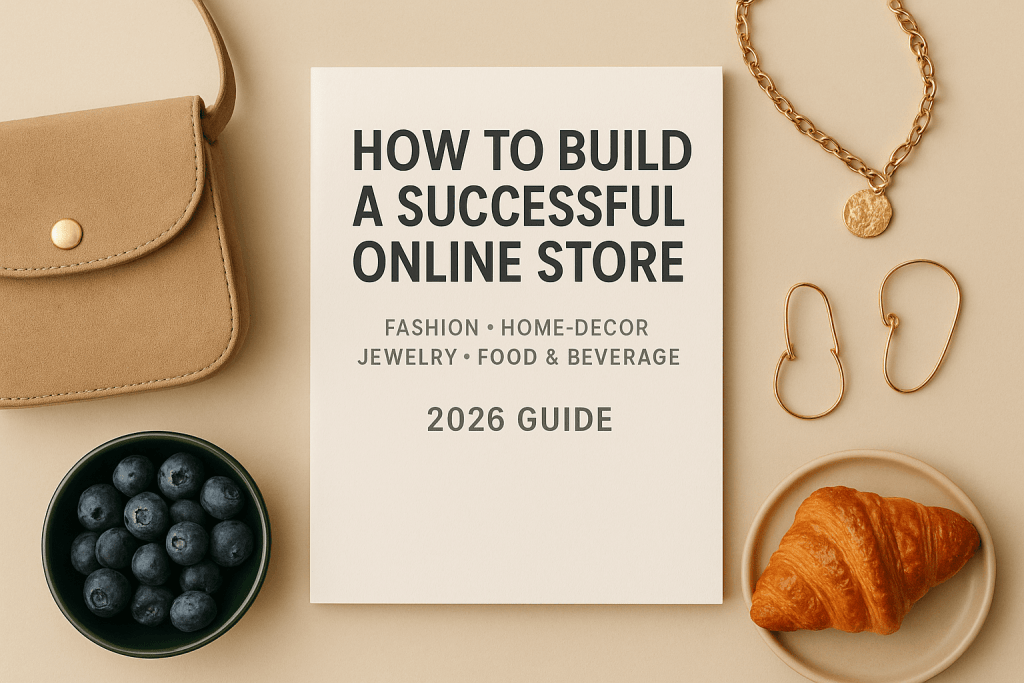

Building a successful online store in 2026 requires more than choosing a platform and uploading a few products. Each industry—Fashion, Home-Decor, Jewelry, and Food & Beverage—has unique customer expectations, regulations, product presentation needs, and marketing triggers.
Whether you’re launching a brand-new store or looking to upgrade your current one, this guide gives you a step-by-step, industry-specific strategy to build a high-performing online store that converts visitors into loyal buyers.
Why Industry-Specific Strategy Matters in E-commerce
A “one-size-fits-all” approach no longer works in e-commerce. The brands winning in 2026 are those that tailor their:
- Website UX
- Product pages
- Photography
- Checkout experience
- Marketing funnel
- Shipping & logistics
- Compliance requirements
…to the expectations of their specific niche.
Below, we break down the exact steps to build a profitable online store in the four industries: Fashion, Home-Decor, Jewelry, and Food & Beverage.
1. How to Build a Successful Online Store for Fashion (Clothing, Boutique, Apparel)
Fashion e-commerce is highly visual, mobile-first, and fast-moving. Customers need clarity around fit, style, and returns, and they want engaging visuals that inspire confidence.
Best Platform to Sell Clothes Online (Shopify vs Magento vs WooCommerce)
Shopify
Best for: Small–mid-sized brands, faster launch, extensive apps
Why: Easy product management, integrated payments, responsive themes
Magento / Adobe Commerce
Best for: Large catalogs, custom features, enterprise-level scalability
Why: Robust customization, complex variations, multi-store capability
WooCommerce
Best for: Content-heavy sites or hybrid blogs-shops
Why: Full WordPress CMS control
Recommendation: Most new and growing fashion brands perform best on Shopify, while enterprises should consider Magento/Adobe Commerce.
Key Features Fashion Stores Must Have
1. High-Converting Fashion Product Pages
Use:
- Multiple model photos
- Size guide (interactive if possible)
- Fit indicators (loose, regular, tight)
- Fabric & washing instructions
- Real customer photos (UGC)
2. Fashion Product Photography Tips
Since fashion is tactile, photography must compensate:
- Shoot on models + flat lay + ghost mannequin
- Use consistent lighting & angles
- Show movement (GIFs or short clips)
- Include 3–5 lifestyle images
3. Fashion Marketing Strategy (2026 Edition)
- Influencer + UGC campaigns
- TikTok / Reels styling videos
- Automated abandoned-cart recovery
- Size-based product filters
- AI-powered personalized recommendations
Fashion Store Launch Checklist
- Mobile-first design
- Fast-loading product pages
- Clear return/refund policy
- Size chart + measurement guide
- Social-proof integrations
2. How to Build an Online Store for Home-Decor
Home-decor shopping is emotion-driven, heavily influenced by visual merchandising, lifestyle aesthetics, and room inspiration.
Best Platform for Home-Decor E-commerce
- Shopify for fast deployment and flexible catalog layouts
- Magento for large stores with complex filtering (furniture, multi-size items)
- Headless Commerce + PWA for premium stores prioritizing speed
Essential Home-Decor Website Features
1. Lifestyle Photography for Home-Decor
Your photos should sell the feeling of a room, not just the product:
- Show items in styled environments
- Display scale using human or familiar objects
- Provide zoomable, high-resolution images
- Use video room tours
2. Shipping & Logistics for Bulky or Fragile Items
Key requirements:
- Sturdy, double-layer packaging
- 3D secure packing peanuts or air cushions
- “White glove” delivery options for furniture
- Transparent delivery timelines on product pages
Tip: Add a “How we ship safely” section and boost consumer trust.
3. Home-Decor SEO Essentials
Optimize product pages with:
- Materials (wood type, fabric type)
- Dimensions (very important in this niche)
- In-room placement suggestions
- Compatible items (cross-selling)
Also Read – SEO vs Paid Ads: Which Is Better for Ecommerce Growth
3. How to Build an Online Store for Jewelry
Jewelry is a high-trust, high-detail, high-ticket niche. Buyers need assurance of authenticity and quality.
Best Platforms for Jewelry Stores
- Shopify – best for smaller boutique brands
- Magento – best for custom configurators (rings, metals, stones)
- Headless – ideal for luxury brands wanting elevated UX
Jewelry Product Page Essentials
1. Trust & Transparency
- Every jewelry product page must include:
- Metal type + purity
- Stone details (cut, clarity, carat)
- Certification (GIA, IGI)
- Warranty info
- Return & resizing policy
2. Jewelry Photography Tips
- Use macro shots
- Eliminate reflections
- Photograph on neutral background
- Add videos for sparkle clarity
- Lifestyle shots (on-hand, neck, ear, etc.)
3. Jewelry SEO Checklist
Include:
- “18k gold ring”, “925 sterling silver bracelet”, etc.
- Local SEO (especially for custom jewelers)
- Structured data for high-value products
- “Handmade”, “artisan”, “custom” modifiers if applicable
4. Fraud & Payment Security
Jewelry stores should implement:
- 3D Secure checkout
- Address verification (AVS)
- Fraud monitoring tools (Shopify Fraud Filter, Signifyd)
4. How to Build a Food & Beverage (F&B) Online Store
Food & beverage e-commerce involves legal requirements, packaging complexity, and cold-chain logistics.
Legal Requirements for Selling Food Online
Depending on region, you may need:
- Business license
- Cottage food permit (for homemade goods)
- FDA/Local food authority compliance
- Ingredient labeling
- Nutrition facts
- Allergy warnings
Always check local regulations.
Best Platforms for Food E-commerce
- Shopify – excellent for subscription boxes, perishable delivery, upsells
- WooCommerce – for content-driven food brands (recipes + shop)
- Magento – for large-scale F&B wholesalers
Shipping Perishable Foods Online
Top practices:
- Use insulated liners or coolers
- Add gel packs or dry ice
- Choose 1–2 day shipping
- Use “temperature control mapping” tools
- Provide live package tracking
Pro Tip: Add a “How we keep your food fresh” explainer on the store.
Food & Beverage Marketing Tips
- Recipe-driven email marketing
- Subscription-based repeat sales
- Seasonal box offers
- Influencer tasting reviews
- TikTok/Instagram micro-videos
Also Read – What Is GEO? How to Optimise for AI Search Engines
Technical Setup Across All Industries
Regardless of niche, every successful online store needs:
1. Site Speed Optimization
- Compress images
- Use next-gen formats (WEBP / AVIF)
- Lazy loading
- Minified CSS/JS
- High-performance hosting / CDN
2. Mobile-First UX
Over 70% of e-commerce traffic in 2025 comes from mobile.
3. Checkout Optimization
- Autofill address fields
- One-page checkout
- Guest checkout
- Multiple payment methods
4. SEO Foundations
- Keyword optimization
- On-page schema
- Internal linking
- Clean URL structure
- Blog strategy for organic growth
Migration & Scalability Checklist
If you’re moving from WooCommerce, Wix, Square, or any older system:
- Redirect old URLs
- Migrate product reviews
- Migrate customer accounts
- Preserve metadata & canonical tags
- Test site speed pre/post migration
- QA all product variations
Conclusion
Building a successful online store in 2026 requires industry-specific planning, the right platform, a strong technical foundation, powerful product pages, and optimized shipping/marketing systems.
Whether you sell fashion, home-decor, jewelry, or food & beverages, the brands that win today are those that combine great UX, trust, speed, and storytelling with a solid technical and SEO foundation.
If you want a tailored setup for your industry, a custom migration, or a full-stack e-commerce build: Contact Webiators for E-commerce Consultation and the best ecommerce development services.
FAQ
1. What’s the best platform to build an online store in 2026?
Ans. For most businesses, Shopify is fastest and easiest. For large, customizable stores, Magento/Adobe Commerce is ideal.
2. How much does it cost to build an online store?
Ans. A basic store can cost $1,000–$10,000; advanced or enterprise stores may run $20,000–$100,000+ depending on customization.
3. How do I ship fragile or perishable items safely?
Ans. Use insulated packaging, double-layer protection, moisture barriers, and express shipping for perishables. Provide tracking.
4. How do I optimize product pages for conversions?
Ans. Use high-quality images, clear benefits, trust badges, reviews, and prominent CTAs. Tailor details to your industry.
5. How can I avoid losing SEO during store migration?
Ans. Implement 301 redirects, migrate meta data, preserve URL structure, and perform pre–post migration audits.
