
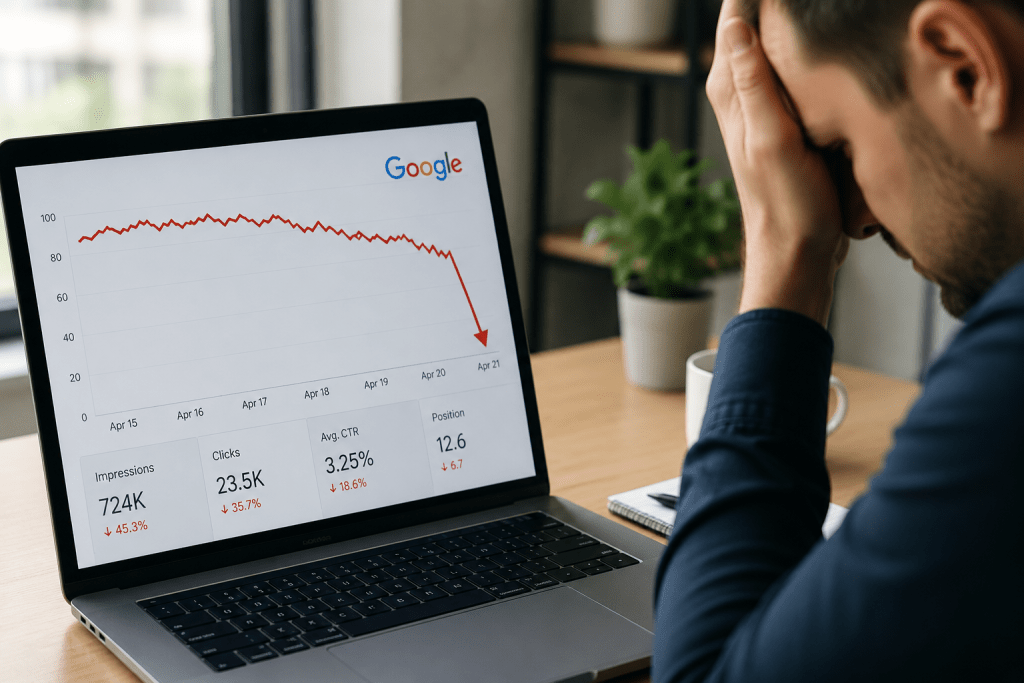

A Google ranking drop can significantly reduce organic traffic, leads, and sales, but it does not always indicate a penalty or serious website problem. Ranking losses commonly occur due to Google core updates, technical SEO issues, outdated content, indexing problems, lost backlinks, or stronger competition.
The fastest way to recover is to identify the root cause using data from Google Search Console and analytics tools, fix technical issues, improve content quality, strengthen authority signals, and align your website with Google’s current search guidelines. Recovery timelines vary depending on the cause, but a systematic approach consistently delivers better results than quick fixes.
What Is a Google Ranking Drop?
A Google ranking drop occurs when a webpage or website loses visibility in Google’s search results, causing lower organic traffic and fewer opportunities to attract potential customers.
For example:
- A page ranking in the top three positions falls to page two.
- A high-performing product page loses visibility for its primary keywords.
- Organic traffic declines suddenly or gradually over time.
- Previously successful content receives fewer clicks and impressions.
Because search engines remain one of the most important channels for discovering information, products, and services online, maintaining strong rankings is essential for business growth.
Why Did My Google Ranking Suddenly Drop in 2026?
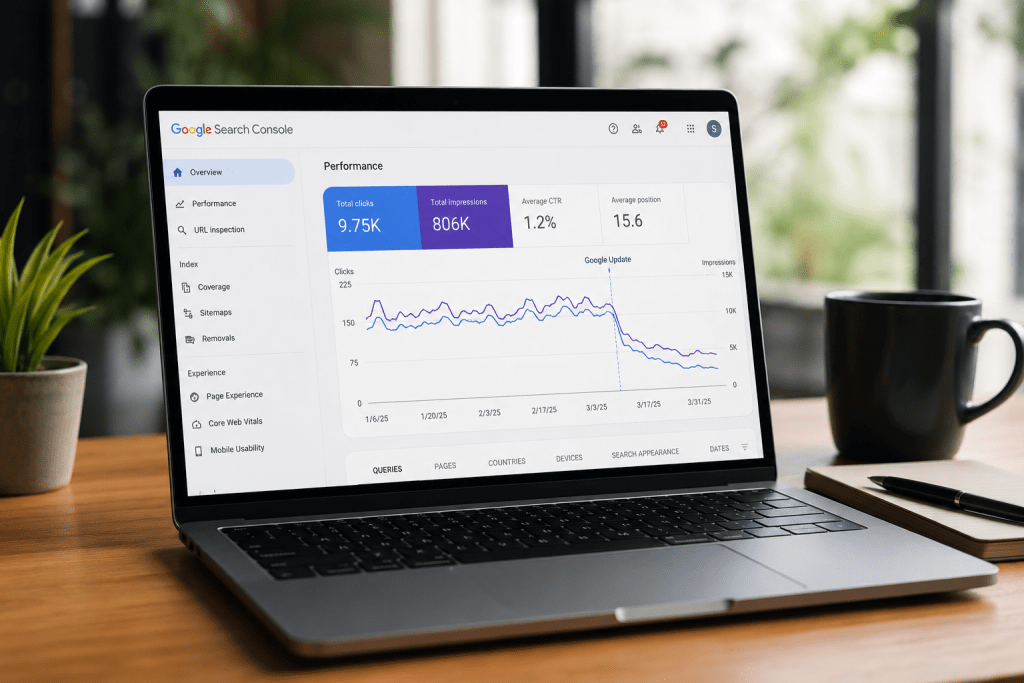
There is rarely a single reason behind a ranking decline. Most drops are caused by one or more of the following factors.
Google Algorithm Updates
Google continuously updates its search systems through regular improvements, spam-fighting measures, and broad core updates designed to improve search quality.
According to Google, core updates are intended to ensure search results continue to surface the most helpful and relevant content. Ranking changes after an update do not necessarily mean your website has done something wrong. Instead, Google’s systems may be reassessing content compared to competing pages.
What to Do
- Review affected pages.
- Compare your content against top-ranking competitors.
- Focus on improving quality, usefulness, and user experience rather than chasing algorithm-specific fixes.
Technical SEO Issues
Technical problems can prevent Google from crawling, indexing, or understanding your content properly.
Common issues include:
- Broken pages (404 errors)
- Incorrect redirects
- Robots.txt restrictions
- Canonical tag conflicts
- Server downtime
- Mobile usability issues
- Core Web Vitals problems
Even a minor technical error can significantly impact search visibility if important pages become inaccessible.
Outdated or Declining Content Quality
Search intent and user expectations evolve over time.
Content that once ranked well may lose visibility because:
- Statistics become outdated.
- Competitors publish more comprehensive resources.
- Search intent changes.
- New information becomes available.
Refreshing existing content is often one of the most effective traffic recovery strategies.
Lost Backlinks
Backlinks continue to be an important signal that helps Google understand a page’s authority and relevance.
Traffic losses sometimes occur when:
- Referring websites remove links.
- Important pages are deleted.
- Competitors acquire stronger backlink profiles.
- Site migrations disrupt existing links.
Monitoring backlink health should be part of every SEO recovery plan.
Increased Competition
Your website may lose rankings even if nothing changes on your side.
Competitors frequently invest in:
- Better content
- Improved site speed
- Stronger authority signals
- Enhanced user experience
- More effective SEO strategies
Search visibility is relative, meaning your rankings depend on how your content compares to competing pages.
What Causes Website Traffic to Drop and How Can It Be Fixed?
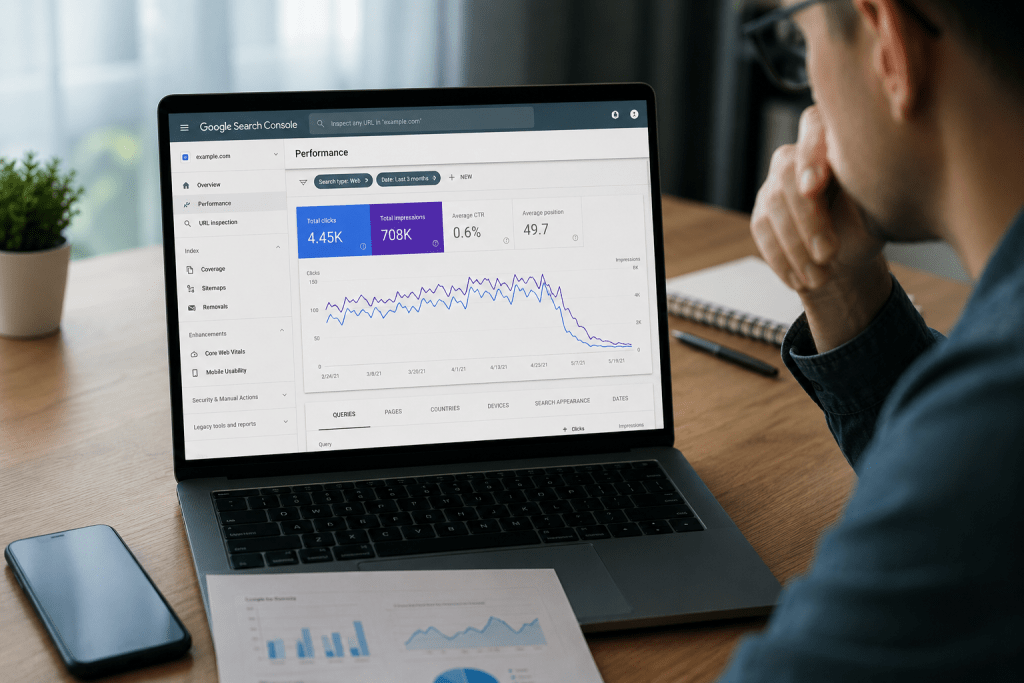
When your website traffic dropped, the first step is understanding whether the issue is truly SEO-related.
Review Google Search Console Data
Start by analyzing:
- Clicks
- Impressions
- Average positions
- Indexed pages
Look for:
- Sudden traffic declines
- Manual actions
- Coverage issues
- Security warnings
Google Search Console often provides the clearest picture of what changed and when.
Identify Which Pages Lost Traffic
Determine:
- Which pages experienced the largest decline?
- Which keywords lost visibility?
- Did the drop occur sitewide or only on specific sections?
Patterns can help reveal the root cause.
For example:
- Blog content may indicate content quality issues.
- Product pages may reveal ecommerce optimization problems.
- Entire website declines may point to technical or algorithm-related issues.
Compare Traffic Sources
Analyze whether the decline affects:
- Organic traffic
- Paid traffic
- Referral traffic
- Direct traffic
If only organic traffic decreases, SEO-related causes are more likely.
How to Recover Website Traffic After a Google Ranking Drop
Successful recovery starts with diagnosis, not guesswork.
Conduct a Comprehensive SEO Audit
A complete audit should evaluate:
- Crawlability
- Indexability
- Site architecture
- Internal linking
- Page speed
- Structured data
- Content quality
- Backlink profile
Many businesses work with a professional Search Engine Optimization Service to accelerate the investigation and recovery process.
Update and Improve Existing Content
Rather than creating new content immediately, review your most valuable pages.
Update:
- Statistics
- Industry examples
- Research findings
- FAQs
- Internal links
- Visual assets
Google recommends creating content that is genuinely helpful and written primarily for people rather than search engines.
Strengthen E-E-A-T Signals
Google’s Search Quality Evaluator Guidelines emphasize the importance of:
- Experience
- Expertise
- Authoritativeness
- Trustworthiness
While E-E-A-T is not a direct ranking factor, it reflects qualities Google aims to reward through its ranking systems.
Ways to strengthen E-E-A-T include:
- Publishing expert-written content
- Displaying author credentials
- Including trustworthy references
- Demonstrating first-hand experience
- Maintaining accurate business information
Fix Technical SEO Problems
Prioritize resolving:
Indexing Issues
Ensure important pages are accessible and indexed.
Site Speed Problems
Google has repeatedly emphasized the importance of page experience and performance.
Focus on:
- Image optimization
- Faster server response times
- Efficient code delivery
- Improved Core Web Vitals
Mobile Usability Issues
Google primarily uses mobile-first indexing, making mobile usability critical for search performance.
Improve Internal Linking
Internal links help search engines understand relationships between pages and distribute authority throughout your website.
Strategically connect:
- Blog articles
- Service pages
- Product categories
- Resource content
Strong internal linking also improves user navigation and engagement.
Earn High-Quality Backlinks
Focus on acquiring links naturally through:
- Original research
- Industry partnerships
- Thought leadership content
- Digital PR campaigns
- Valuable resources worth referencing
Avoid manipulative link-building tactics that violate Google’s guidelines.
Best Strategies to Recover Organic Traffic After a Google Update
Follow Google’s Helpful Content Principles
Google recommends creating content primarily for people rather than search engines.
Ask yourself:
- Does the content demonstrate genuine expertise or experience?
- Does it answer the user’s question thoroughly?
- Would visitors find value without needing additional resources?
- Is the information accurate and trustworthy?
Content that genuinely helps users is more likely to perform well over time.
Focus on Search Intent
One of the most overlooked causes of ranking loss is intent mismatch.
Review whether users now expect:
- Product pages
- Comparison guides
- Videos
- Local results
- Educational content
Aligning content with current search intent often produces substantial ranking improvements.
Optimize for AI Search and Traditional Search
Modern search experiences increasingly include AI-generated summaries and answer engines.
To improve visibility:
- Answer questions directly.
- Use clear headings.
- Include concise definitions.
- Add FAQ sections.
- Support claims with trustworthy sources.
- Structure content logically.
These practices help both search engines and AI systems understand and cite your content accurately.
Improve Ecommerce User Experience
For online stores, rankings and conversions are closely connected.
Businesses investing in professional Ecommerce development services often improve:
- Site speed
- Mobile usability
- Navigation
- Product page quality
- Checkout performance
A better user experience supports both SEO and revenue growth.
Align SEO With Broader Marketing Efforts
Organic growth becomes more sustainable when SEO supports overall brand visibility.
A strategic Ecommerce Marketing services approach can help strengthen:
- Brand awareness
- Customer engagement
- Content distribution
- Link acquisition opportunities
- Long-term traffic growth
Strong brands often benefit from increased trust and engagement signals.
Expert Insight
One of the most common mistakes after a ranking loss is making large-scale website changes before identifying the actual cause.
Successful SEO recovery typically begins with careful analysis using Google Search Console, analytics data, technical audits, and competitor research. Solving the wrong problem can delay recovery and create additional ranking challenges.
How Long Does SEO Traffic Recovery Take After a Ranking Loss?
There is no universal recovery timeline.
According to Google, improvements may be reflected after content is crawled, indexed, and reassessed by search systems.
Recovery speed depends on:
- The cause of the ranking decline
- Website authority
- Competition level
- Crawl frequency
- Scope of improvements
Some technical fixes may show results relatively quickly, while broader quality improvements can require weeks or months to be fully recognized.
Because every website is different, no SEO provider can guarantee an exact recovery timeframe.
Read Also: How Google’s Algorithm Updates Affect Your Website’s Ranking
Key Takeaways
- A Google ranking drop is commonly caused by algorithm updates, technical SEO issues, content quality problems, lost backlinks, or increased competition.
- Start with data analysis before making major website changes.
- Conduct a complete SEO audit to identify the root cause.
- Improve content quality and align pages with current search intent.
- Fix indexing, performance, and mobile usability issues.
- Strengthen E-E-A-T signals and website authority.
- Use internal linking strategically.
- Focus on long-term quality improvements rather than short-term SEO tactics.
FAQs
1. How do I recover website traffic after a Google ranking drop?
Ans. Begin by identifying the root cause through Google Search Console and analytics data. Then address technical issues, improve content quality, strengthen authority signals, and optimize the user experience.
2. Can a website recover after a Google core update?
Ans. Yes. Google states that pages affected by core updates can improve performance when content quality, relevance, and overall usefulness are strengthened over time.
3. Should I redesign my website after a ranking drop?
Ans. Not necessarily. First identify the root cause. A redesign may help in some situations, but unnecessary structural changes can sometimes create additional SEO problems.
4. What is the fastest way to improve rankings after traffic loss?
Ans. Address indexing issues, fix technical errors, update valuable content, improve site performance, and strengthen internal linking. These actions often deliver the quickest measurable improvements.
5. Are Google ranking drops always caused by penalties?
Ans. No. Most ranking declines are not penalties. Many occur because Google’s systems have reassessed content relevance, user intent, or competitor pages.
