
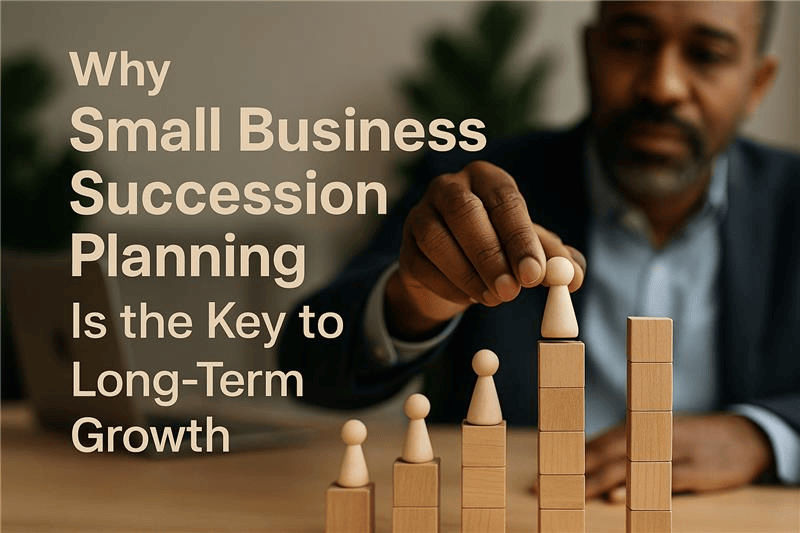

“Running a small business is not just about today’s profits. It’s about ensuring tomorrow’s survival.”
If you own a small business, chances are you wear many hats—manager, visionary, problem solver, even mentor. But here’s something that often gets ignored until it’s too late: small business succession planning.
It sounds formal, maybe even intimidating. Yet, it’s one of the smartest and most protective decisions you can make. A good succession plan ensures that when you step aside—whether by choice or circumstance—your business doesn’t crumble. Instead, it grows stronger.
This isn’t just an exit strategy. It’s a roadmap for long-term growth, business continuity, and peace of mind. Let’s unpack why it matters so much, and how you can begin today.
What Exactly Is Small Business Succession Planning?
Think of succession planning as passing the baton in a relay race. The runner doesn’t stop mid-track, hand it over, and hope for the best. They prepare, pace themselves, and transfer with precision so the next runner doesn’t stumble.
In business terms, succession planning means:
- Identifying future leaders or owners.
- Training and mentoring them before transitions happen.
- Documenting key processes so nothing is lost.
- Aligning with an overall Business Continuity Plan.
- Preparing financially, legally, and emotionally for your eventual exit.
Without this, businesses face sudden shocks. A founder falls ill. A partner retires unexpectedly. A key manager leaves. Without a plan, continuity breaks. Customers notice. Employees panic. Value drops.
That’s why small business succession planning is more about survival and long-term growth than it is about saying goodbye.
Why Succession Planning Isn’t Just About Leaving — It’s About Growing
Many owners think succession planning is something you worry about when retirement is around the corner. Truth is, it fuels growth even while you’re still in charge. Here’s how:
1. It Boosts Confidence in Your Business
Investors, banks, even employees feel reassured when there’s a plan in place. They know your company isn’t a one-person show. That kind of security translates into trust—and trust makes businesses more attractive and more valuable.
2. It Keeps Your Best People Around
High-performing employees want to see a future for themselves. If they know you’re grooming leaders, they’ll stick around. People stay when they can picture their own growth in the company.
3. It Protects Operations From Surprises
Imagine if your operations manager left tomorrow. Would the business keep running smoothly? If the answer is no, then you need a succession plan. Documenting responsibilities, workflows, and authority lines prevents chaos.
4. It Helps You Stay Future-Focused
Succession planning forces you to ask: What will my business need in 3, 5, or even 10 years? That forward thinking helps you align your strategy today with tomorrow’s opportunities.
5. It Sets You Up for a Strong Exit
One day, you’ll want to slow down, sell, or hand over the reins. With succession planning, you’ll exit on your terms, with your value intact.
Simply put: succession planning doesn’t slow growth. It secures it.
Business Continuity & Succession Planning: They Work Hand in Hand
A Business Continuity Plan prepares you for natural disasters, system failures, or supply chain disruptions. But what about leadership disruption? That’s where succession planning plugs in.
When you merge the two:
- Decision-making power doesn’t freeze if a leader is absent.
- Knowledge isn’t locked away with one person.
- Employees know exactly who steps in during emergencies.
- Customers see stability, not confusion.
Together, continuity and succession build resilience—something every small business needs in unpredictable times.
Succession Planning Best Practices: What Works and What Doesn’t
Let’s get practical. What does a solid plan look like? And where do businesses stumble?
Do This:
- Start early. Don’t wait until retirement is knocking.
- Focus on critical roles. CEO, financial head, operations—positions that can’t just be replaced overnight.
- Involve advisors. Accountants, lawyers, and consultants reduce blind spots.
- Mentor actively. Don’t just name a successor—train them, give them projects, and let them lead.
- Document everything. Keep a written plan with clear steps and review it annually.
- Balance confidentiality. Share enough to build trust, but keep sensitive decisions private until the time is right.
Avoid This:
- Waiting until there’s a crisis.
- Choosing loyalty over competency.
- Keeping the plan “in your head” only.
- Ignoring tax or financial consequences.
- Forgetting to update as circumstances change.
A good rule? Treat succession planning like insurance: you hope you don’t need it tomorrow, but if you do, you’ll be grateful it’s there.
Exit Planning for Business Owners: The Other Side of Succession
If succession planning is about who will lead, exit planning is about how you’ll step out.
Business owners often confuse the two. Here’s how they work together:
- Succession planning keeps operations steady.
- Exit planning ensures you harvest the financial value you built.
Exit strategies can include selling to family, transferring to employees, or selling externally. Each has tax, emotional, and financial consequences. By blending both approaches, you make sure your company survives—and you personally thrive—post-exit.
Think of it as tying up both ends of the rope: the business’s future and your personal legacy.
A Practical 7-Step Roadmap for Small Business Owners
If you’re wondering where to start, here’s a straightforward framework:
- Define your vision. Where do you want the business in 5 years?
- Identify key roles. Who are the “can’t-live-without” people or positions?
- Spot potential successors. Look at internal talent first, but don’t ignore external options.
- Assess gaps. Compare what’s needed versus current skills.
- Train and mentor. Use coaching, cross-training, and stretch assignments.
- Put it in writing. Draft a formal plan with timelines, roles, and contingencies.
- Review and refine. Revisit the plan yearly—or sooner if major changes happen.
Even starting small—like documenting processes or identifying one backup—can make a world of difference.
Real-Life Story: The Business That Survived a Sudden Change
Consider a family-owned retail store. The founder, unexpectedly hospitalized, had no documented plan. Employees scrambled. Suppliers withheld shipments. Customers lost trust. The business limped for months.
Now imagine the opposite: a founder who had trained her operations manager over three years, kept updated SOPs, and prepared a financial plan. When she stepped back, the transition was seamless. Customers barely noticed. The company not only survived but grew under new leadership.
The difference? Succession planning.
How Webiators Fits Into the Bigger Picture
At Webiators, we know growth doesn’t stop when leadership changes. The future of your business also depends on its digital backbone.
- With our Ecommerce website development services, you ensure your online store is scalable and adaptable no matter who’s leading tomorrow.
- With our Ecommerce Marketing Services, you can drive consistent growth and visibility—something that makes your business more attractive to both successors and potential buyers.
A leadership change shouldn’t interrupt your momentum. Your digital presence should be strong enough to outlast any one person.
Protect Your Legacy Before It’s Too Late
Your small business is more than a livelihood. It’s a legacy, a dream built with years of effort. But without a succession plan, that dream can vanish in an instant.
Start now. Identify successors. Document processes. Build continuity. And don’t wait for “someday.”
Because planning for tomorrow doesn’t take away from today’s growth—it strengthens it.
And if you want to ensure your business is digitally future-ready, remember: Webiators can help with Ecommerce website development services and Ecommerce Marketing Services that keep your company strong through every leadership transition.
So, here’s the real question: What’s one step you’ll take this week toward succession planning?
FAQs
1. What is small business succession planning in simple terms?
Ans. It’s preparing future leaders to take over smoothly when today’s leaders step away.
2. How is it different from a Business Continuity Plan?
Ans. Succession planning is about leadership and ownership transition. Continuity planning is about keeping operations stable in any disruption. They work best together.
3. When should I start succession planning?
Ans. The earlier, the better. Treat it as an ongoing process, not a one-time task.
4. Who should be involved in succession planning?
Ans. Owners, senior leaders, advisors (like accountants and attorneys), and in some cases, high-potential employees.
5. Can small businesses really afford succession planning?
Ans. Absolutely. In fact, they can’t afford not to. Even simple steps like documenting workflows and identifying backups can save a business from collapse.
