

The digital landscape of 2026 has moved far beyond the era of simple keyword matching. We have entered a phase of “Intent Intelligence,” where search engines use neural networks to understand not just what a person types, but what they actually need. Mastering Search Engine Marketing (SEM) is no longer a peripheral task; it is the core of survival in a crowded marketplace.
To truly understand how search engine marketing works, one must view it as a sophisticated ecosystem. It is a blend of paid visibility and organic authority, working in tandem to capture the consumer at the exact moment of curiosity or need. Below are the twelve pillars of modern SEM that define success today.
1. The SEM Definition: More Than Just Ads
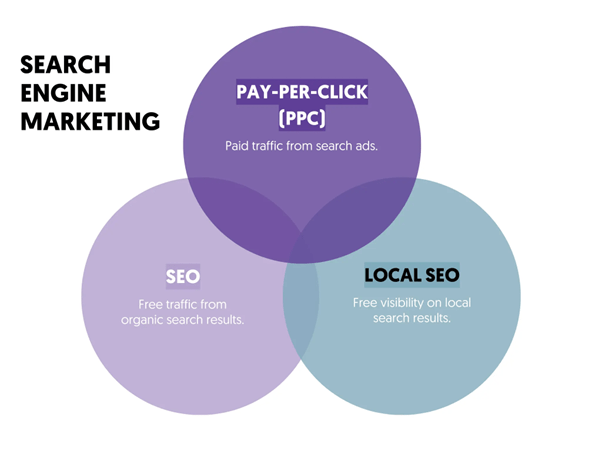
Many mistakenly believe that SEM refers only to paid advertisements or Pay-Per-Click (PPC). In professional circles, however, SEM is the overarching strategy that includes both paid search and SEO (Search Engine Optimization). You cannot depend on a single approach. A balance of both Paid Search and Search Engine Optimization will get you results. With paid ads, you can see the effects almost immediately, whereas with SEO, the brand will gradually get organic traffic.
2. Why SEO is Important for Long-Term ROI
Relying solely on paid clicks creates a situation where traffic stops the moment the budget runs out. This is exactly why SEO is important; it creates a self-sustaining asset. Organic search results are viewed by users as “earned” rather than “bought,” which carries a higher level of psychological weight. When a brand appears at the top of the organic results, users perceive it as a leader in the industry, not just a company with a large marketing budget.
3. The Shift to Topical Authority
Search engines have evolved from matching words to understanding “Entities.” Writing a single post about a specific keyword is no longer enough. Expertise matters if you want your content to rank higher. Write and structure your content accordingly.
- Pillar Pages: Comprehensive guides that cover a broad topic in extreme depth.
- Cluster Content: Supporting articles that answer specific, granular questions related to the pillar.
- Internal Linking: A strategic web of links that shows search engines the relationship between different pieces of expertise.
4. Understanding the Mechanics of Search Intent
Modern search engine marketing works by identifying the “why” behind a query. There are four primary types of intent: Informational (seeking knowledge), Navigational (seeking a specific site), Commercial (researching products), and Transactional (ready to buy). Serving a “buy now” sales page to someone looking for a “how-to” guide causes bounce rates to skyrocket. Aligning content format with the user’s psychological state is the secret to high conversion rates.
5. The Evolution of “Zero-Click” Searches
A significant portion of searches now end on the search results page itself. AI-generated overviews provide the answer immediately, meaning the user never clicks through to a website. While this may seem discouraging, it presents an opportunity for “Brand Real Estate.” By optimizing content to be the source of these AI summaries, a brand gains massive exposure and authority, even if traditional click metrics look different from those in previous years.
6. Technical Foundations and Core Web Vitals
A high-performance marketing strategy cannot be built on a broken website. Technical SEO remains the silent engine of SEM success. Google’s “Core Web Vitals” are the primary metrics used to judge site health:
- Largest Contentful Paint (LCP): Measuring how fast the main content loads for the user.
- First Input Delay (FID): Tracking how quickly the site responds to a user’s first interaction.
- Cumulative Layout Shift (CLS): Ensuring the page is stable, and elements don’t jump around as it loads.
7. E-E-A-T: The Shield Against AI Fluff
Google assesses content on the basis of Experience, Expertise, Authoritativeness, and Trustworthiness. These E-E-E-A-guidelines are especially crucial for content that concerns health, finance, and safety. Basically, Google uses these guidelines to ensure that trustworthy and quality content reaches the users. So a site which has higher E-E-A-T will rank higher on the SERP’s. Today, with AI everywhere, there is a possibility of low-quality content.
Google penalizes such content. To ensure a site is E-E-A-T optimized, you can include personal anecdotes that show that you possess relevant experience. Include author bios which have professional details of the author i.e if someone is writing about health and that person is a doctor, then that person has the expertise to give advice. These are the SEO strategies that need to be included in the blog to make it relevant for users. AI can write content, but it cannot replicate expertise, experience, and trust.
8. The Power of Video and Visual Search
Text is only one part of the equation. With the dominance of short-form video, an SEM strategy must be multi-modal. Search engines are increasingly pulling video “chapters” directly into the results. Neglecting to create video content that answers common customer questions means ignoring a massive segment of the market that prefers watching over reading.
9. Leveraging Paid Data for Organic Growth
One of the most underutilized SEO strategies in the blog is using PPC data to inform writing. Paid search gives instant feedback on which headlines have the highest Click-Through Rate (CTR). Taking the winning copy from ads and incorporating it into organic Meta Descriptions and H1 tags allows a brand to “borrow” the success of paid campaigns to boost organic performance.
10. Local SEM: Dominating the “Near Me” Economy
For any business with a physical footprint, local search is the most profitable slice of the SEM pie. Local search intent is almost always transactional in nature.People who write search queries with “services/product near me” have made up their mind to buy that service/product. Include reviews and photos in your Google Business Profile. This can also boost traffic to your site. Use Hyper-targeted ads to target people in a specific locality or area. Local SEM works faster than SEO to rank businesses
11. Structured Data and Schema Markup
Think of Schema markup as a “translator” for search engines. It is a specific code added to a site that tells bots exactly what they are looking at whether it’s a product price, a recipe’s cooking time, or a star rating. Using structured data allows search results to appear as “Rich Snippets,” which are much more visually appealing and have significantly higher click-through rates than plain text links.
12. Constant Optimization and the Feedback Loop
With SEO, the work is never “finished”. The digital marketplace is a moving target. Successful marketers follow a strict cycle to ensure the strategy stays relevant:
- Analysis: Monitoring tools to see what keywords are trending and where traffic is dropping.
- Hypothesis: Formulating reasons why a certain page isn’t converting as expected.
- Testing: Experimenting with changes to headlines, calls-to-action, or imagery.
- Scaling: Doubling down on successful tactics and discarding those that fail to deliver ROI.
Conclusion
Search Engine Marketing in 2026 requires the technical ability to satisfy an algorithm and the creative ability to satisfy a human being. By understanding why SEO is important for brand legacy and mastering how search engine marketing works across different platforms, a bridge can be built directly to the ideal customer.
The Internet can be chaotic at times, but if you know how to navigate this chaos, it’s a cakewalk. This will also allow you to stand out. Prioritizing intent and user experience is the key.
