
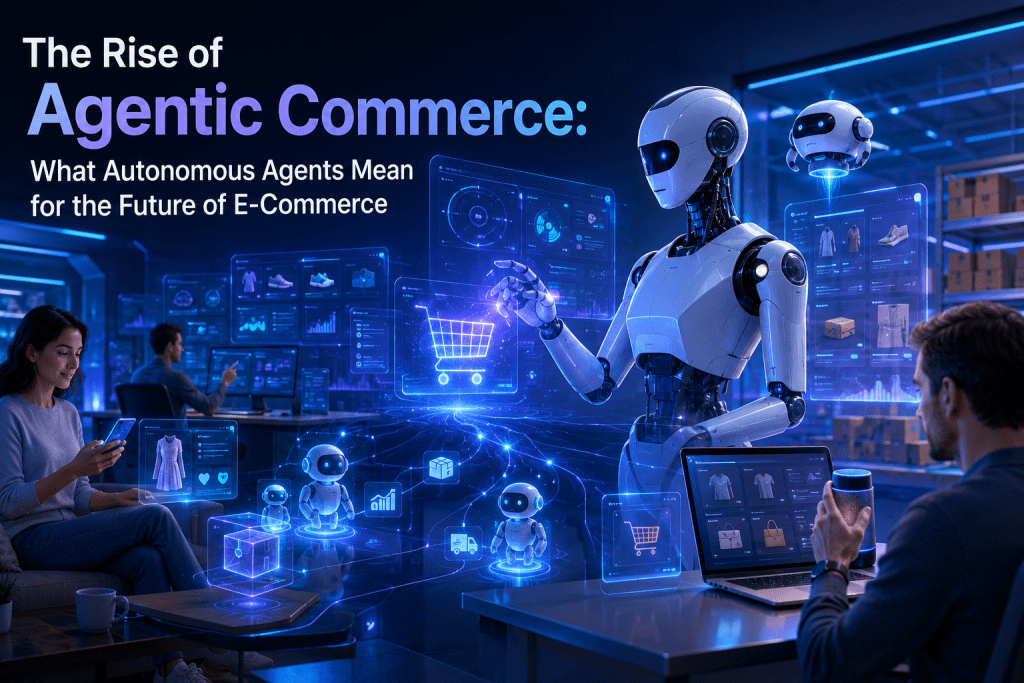

If you’ve spent any time in the e-commerce world lately, you’ve probably noticed something shifting under the surface. Not a small nudge either. More like the moment you realize your quiet neighborhood just opened a hyper-efficient retail hub overnight. The big shift is called Agentic Commerce, and it’s quickly becoming the next major turning point in how customers explore products, make decisions, and complete purchases online.
And honestly, it’s about time. Shoppers have been begging for less friction, less guesswork, and less digital noise. Businesses want the same thing. Agentic Commerce brings both sides what they’ve been waiting for: intelligent systems that don’t just answer but actually act.
Let’s break down what’s happening without the buzzwords getting in the way.
What Exactly Is Agentic Commerce?
Traditional e-commerce relies on customers navigating menus, filters, search bars, and endless scrolling. With Agentic Commerce, those steps shrink dramatically because AI agents take on much of the work humans used to do.
Think of these agents as autonomous decision-making engines that analyze needs, preferences, context, and behavior to recommend, compare, and even complete tasks automatically.
But don’t confuse them with the old-school chatbot that only understands half your sentences. Modern agents can hold multi-step goals, adjust in real time, and operate independently.
They integrate things like:
- generative AI retail algorithms
- personalized product discovery workflows
- real-time inventory and pricing data
- digital shopping assistants capable of full-journey support
Instead of “searching” for products, shoppers can simply tell the agent what’s going on in their lives. The agent interprets, researches, filters, and guides.
According to McKinsey, this shift could redefine how the entire commerce ecosystem functions, both for shoppers and for merchants.
Why Agentic Commerce Works So Well for Today’s Shoppers
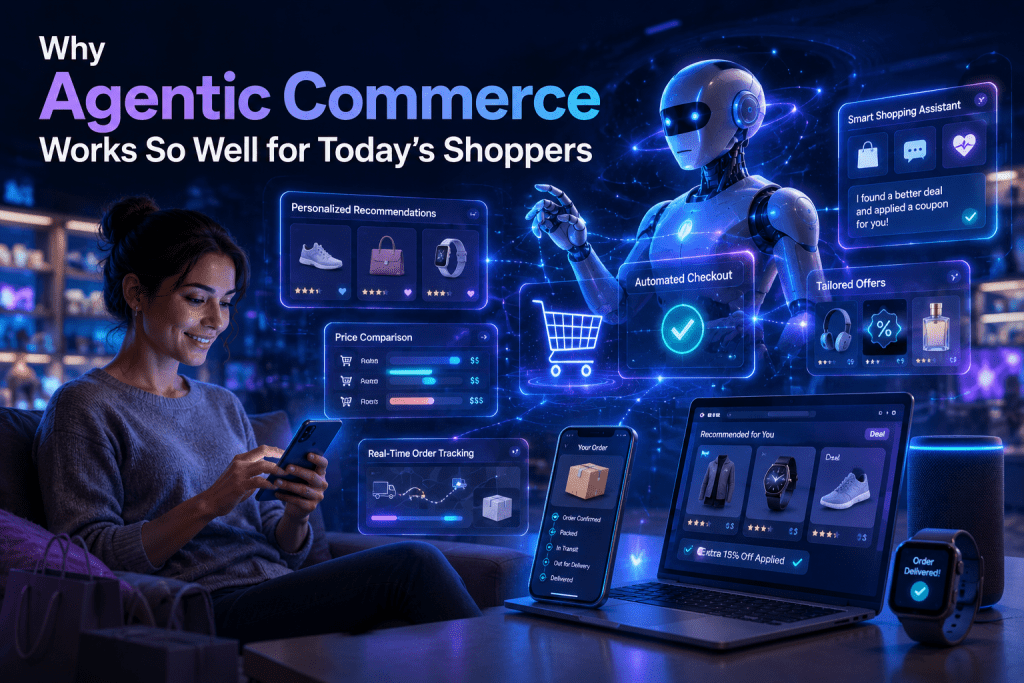
Customers no longer want to sift through 47 versions of the same product. They want clarity. Speed. Confidence. And maybe a little reassurance that they’re not wasting money.
Here’s why agent-driven shopping feels like a breath of fresh air.
1. It delivers personalized product discovery that feels… well, personal.
There’s personalization, and then there’s the kind of tailored experience that almost feels like talking to a well-informed friend who knows your taste better than you admit.
Agentic Commerce pulls in data from previous purchases, browsing patterns, style preferences, and even contextual cues like the weather forecast or your upcoming travel plans.
The result? Recommendations that feel helpful instead of pushy.
2. It eliminates choice overload
Most users don’t abandon carts because they hate the product. They abandon them because the journey feels like mental cardio. When agents collapse steps and simplify decisions, customers relax. The path from intent to checkout becomes shorter and far less stressful.
3. It brings transparency to a world full of noise
Rather than bouncing between tabs, reviews, screenshots, and YouTube demos, the agent compiles the information and explains the tradeoffs. This boosts buyer confidence and reduces returns.
Also Read – Best Wholesale Ecommerce Platforms for B2B Businesses in 2026
How Agentic Commerce Transforms the Merchant Experience
Shoppers aren’t the only winners here. Merchants get an entirely new toolkit—one that amplifies revenue while taking workload off internal teams.
Smarter demand forecasting
Agents learn from behavioral patterns and market signals faster than traditional analytics systems. They can spot micro-trends early and help merchants adjust pricing, inventory, or bundling strategies.
Higher conversion rates through AI-powered product recommendations
When customers receive targeted, context-aware suggestions, conversion lifts become predictable instead of a lucky break. The experience feels curated, not automated.
Reduced customer service load
Digital shopping assistants can solve complex customer needs before a human rep is needed, whether it’s comparing models, explaining compatibility, or navigating policies.
More opportunities for retention
Since agents stay with the customer throughout their lifecycle, they build a memory of what each shopper prefers. Think of it as the evolution of loyalty programs into personalized concierge systems.
How Autonomous Agents Actually Work (Behind the Scenes)
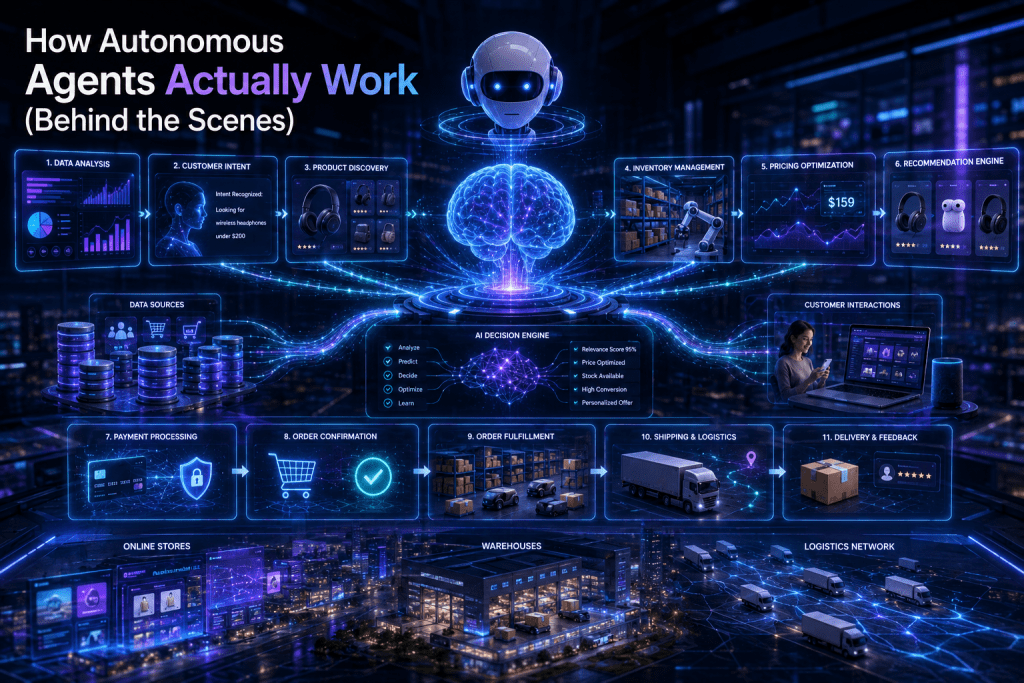
This is where things get technical, but Gartner provides a useful explanation of how intelligent agents function.
Here’s what typically happens during a customer interaction:
1. The agent identifies the user’s goal
For example: “I need a lightweight laptop for remote work.” The agent extracts intent, lifestyle clues, and constraints.
2. It pulls all relevant data
Specs, reviews, pricing, compatibility — even browsing history if permitted.
3. It evaluates and filters options
According to Gartner, intelligent agents use autonomous reasoning frameworks to score, rank, and eliminate mismatches.
4. It presents a clean, simple outcome
Not 40 options — just a curated selection with explanations.
5. It takes action
Add to cart, apply a promo, finalize the purchase: the agent handles it if the user approves.
This isn’t automation that feels robotic. It’s automation that feels like help.
How Businesses Can Prepare for the Agentic Commerce Era
If you’re running an e-commerce brand—or building them for clients—it’s worth preparing now. The shift is happening faster than most retailers realize.
Upgrade your product data
Agents rely heavily on clean, structured data. The clearer your product attributes, the smarter your AI-driven discovery will be.
Connect systems through modern APIs
Data silos will slow you down. Unified inventory, pricing, customer profiles, and catalog feeds are essential.
Invest in AI-infused customer journeys
Companies offering specialized eCommerce Marketing Services and ecommerce development services (like Webiators) can guide you through integrating these tools without breaking your existing workflows.
Start with task-specific agents
Instead of flipping your entire store into autonomous mode overnight, pilot agents that help with product recommendation, cart recovery, or guided shopping.
Also Read – Top Benefits of AI Powered eCommerce for Sales Growth & Customer Experience
What’s Next: A Future Beyond Traditional Checkout
Agentic Commerce is evolving fast, and the next few years may transform e-commerce even more dramatically. Drawing from Gartner’s insights into intelligent agents and Salesforce’s projections of autonomous shopping support, here’s where we may be headed:
- Conversational shopping journeys that feel natural
- Dynamic product bundles created in real time
- Negotiation between buyer agents and merchant agents
- Automatic subscription management and replenishment
- Stores designed more like interactive assistants than traditional product grids
The idea of “searching and clicking” may soon feel like a relic.
A Future That Feels Surprisingly Human
For all the automation involved, the greatest strength of Agentic Commerce is how human the experience becomes. Shoppers get clarity, merchants get efficiency, and interactions feel less mechanical than current digital menus.
We’re entering a retail era where technology works quietly in the background so humans can make better, faster, more confident decisions. And honestly, that feels like a future worth leaning into.
If you’re planning to embrace this shift or want guidance on weaving AI agents into your storefront, Webiators can help you build the next evolution of your digital commerce experience.
FAQs
1. What are autonomous commerce agents?
Ans. Autonomous commerce agents are AI-powered systems that can perform ecommerce tasks independently, such as managing inventory, optimizing pricing, processing orders, handling customer inquiries, and making data-driven decisions with minimal human intervention.
2. How is it different from traditional chatbots?
Ans. Chatbots respond. Agents act. They can complete tasks, evaluate options, and automate steps without constant user input.
3. How does agentic commerce automation work?
Ans. Agentic commerce automation uses intelligent AI agents that can analyze data, make decisions, and execute actions across ecommerce operations. These agents continuously learn from customer behavior, sales trends, and business goals to improve performance.
4. What is an autonomous AI agent in ecommerce?
Ans. An autonomous AI agent for ecommerce is a software-based assistant that can automate repetitive tasks, monitor store performance, personalize customer experiences, and recommend actions to improve conversions and operational efficiency.
5. How can businesses adopt Agentic Commerce?
Ans. Start with structured product data, integrate APIs, and partner with experts offering ecommerce development services to deploy task-specific agents.