

Google processes billions of webpages every day, yet many ecommerce stores still struggle to get product pages indexed quickly. Some pages appear in search results within hours, while others remain invisible for weeks.
In many cases, the problem is not the product quality or website design.
It’s the site structure.
More specifically, internal linking.
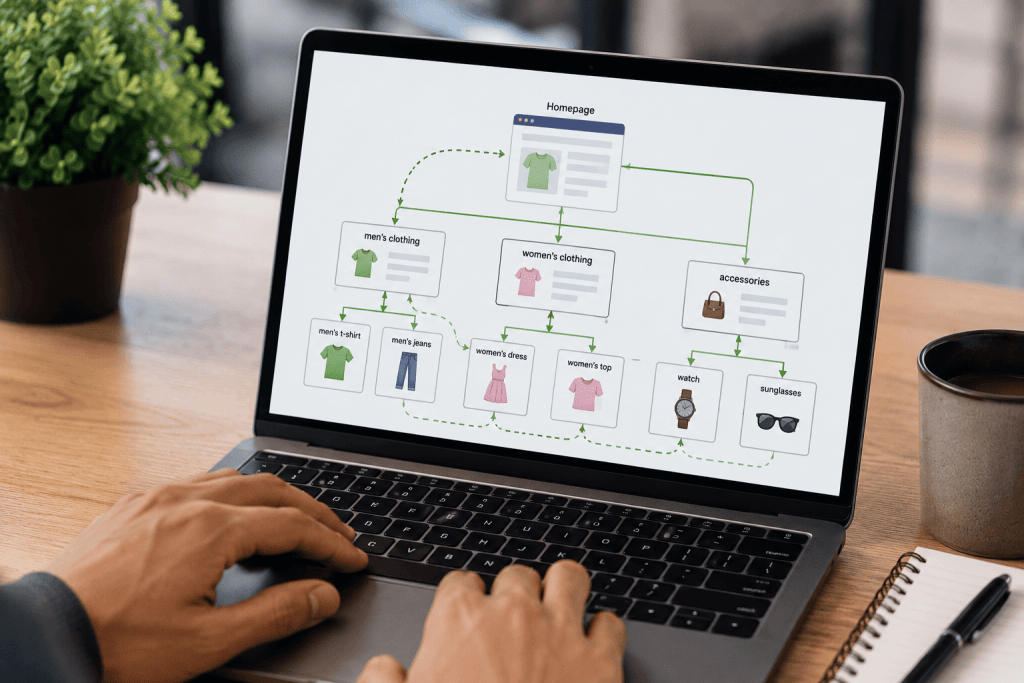
A strong internal linking ecommerce strategy helps Google discover pages faster, understand your store hierarchy, and crawl important content efficiently. Without proper internal links, even valuable products can remain buried deep within your website where search engines rarely prioritize them.
For ecommerce businesses competing in crowded search results, this matters more than ever.
What Is Internal Linking in Ecommerce?
Internal linking means connecting one page of your website to another page within the same domain.
Examples include:
- Linking blogs to product pages
- Connecting category pages to collections
- Adding related product sections
- Using breadcrumb navigation
- Linking featured products from the homepage
These links guide both visitors and search engine crawlers through your website.
Think of your ecommerce store like a shopping mall. Internal links act as signs, pathways, and floor maps that help people move smoothly between sections. Without those connections, visitors get lost, and Google crawlers struggle to understand which pages matter most.
That directly affects SEO performance.
Why Internal Linking Matters for Google Crawling
Google discovers content primarily through links.
When a crawler lands on your homepage, it follows internal links to explore additional pages. If product pages are difficult to reach or disconnected from the rest of the site, crawlers may:
- Take longer to find them
- Crawl them less frequently
- Miss them entirely
This issue becomes more serious for ecommerce websites with:
- Large inventories
- Multiple product categories
- Seasonal collections
- Frequent product updates
Well-structured ecommerce internal linking improves crawl efficiency by helping Google navigate pages logically.
According to Google Search Central, clear site architecture and internal linking help search engines understand website structure and discover important pages more effectively.
How Internal Linking Ecommerce Helps SEO Performance
Faster Indexing for New Pages
New product launches depend on fast indexing.
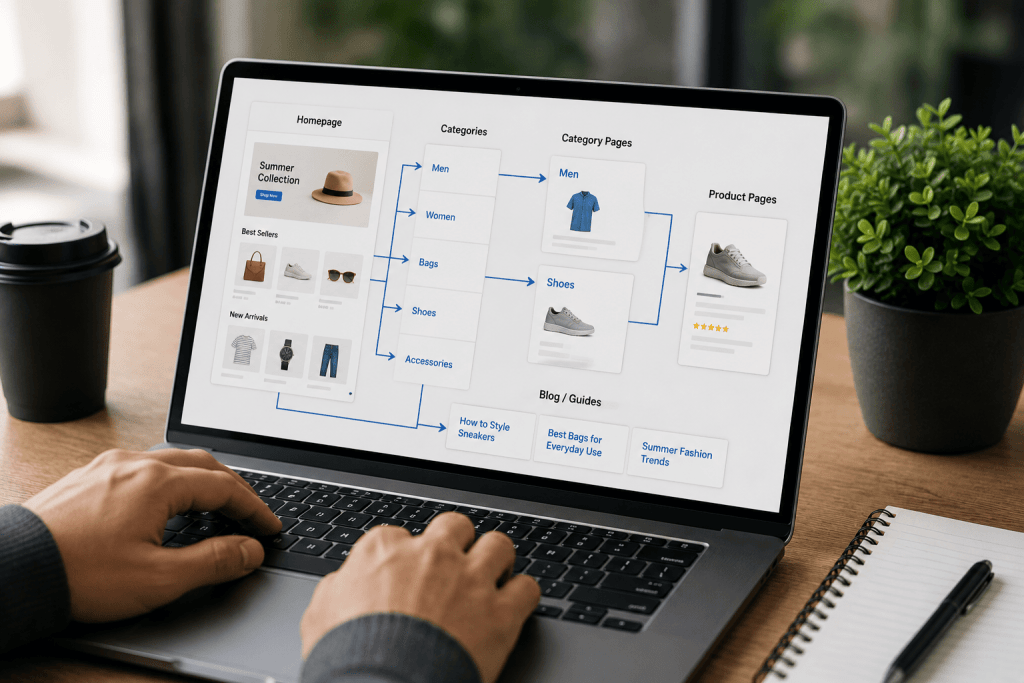
If a newly added product page has no strong internal links pointing to it, Google may take longer to discover it. However, when that page is linked from:
- Homepage banners
- Category pages
- Blog content
- Related products
…it becomes easier for crawlers to access quickly.
For ecommerce businesses running seasonal promotions or limited-time campaigns, faster indexing can directly impact traffic and sales opportunities.
Reduced Crawl Depth
Crawl depth refers to how many clicks it takes to reach a page from the homepage.
Pages buried too deeply often receive less crawl attention.
For example:
Efficient structure:
Homepage → Running Shoes → Product Page
Poor structure:
Homepage → Sale → Men’s Collection → Sportswear → Running → Performance Collection → Product Page
Simpler structures help search engines crawl more pages using fewer resources.
This is especially important because Google allocates a crawl budget to websites. Large ecommerce stores with inefficient linking structures can waste crawl resources on unnecessary or duplicate URLs.
Internal Links Distribute Authority Across Pages
Some pages naturally carry more SEO authority than others.
These typically include:
The homepage
High-performing blog posts
Popular category pages
Internal links pass authority from stronger pages to weaker ones.
For example, a well-ranked buying guide about fitness gear can support related product pages through contextual internal links.
This is one reason businesses investing in Search Engine Optimization Services often prioritize internal architecture alongside content and backlink strategies.
External backlinks help bring authority into the site.
Internal links help distribute it effectively.
How to Improve Internal Linking in Ecommerce for SEO
Improving internal linking does not require overly complicated systems.
Consistency and structure matter more.
Build Logical Category Structures
Your categories should follow a clean hierarchy.
Example:
Electronics
- Smartphones
- Accessories
- Chargers
- Earbuds
Clear structures improve navigation for users and help Google understand topical relationships between pages.
Many businesses using professional Ecommerce development services focus on navigation planning early because restructuring large stores later becomes technically difficult.
Use Related Product Sections
Related product modules help both SEO and user experience.
Examples include:
- Frequently bought together
- Similar products
- Recommended accessories
These sections create additional crawl paths and strengthen topical relationships between products.
They also help visitors discover more products naturally, which can improve engagement and conversions.
Connect Blog Content to Commercial Pages
Blog content should support important store pages whenever relevant.
For example:
- Buying guides can link to product collections
- Tutorials can reference useful tools or accessories
- Trend articles can connect to featured categories
A blog discussing store performance optimization could naturally mention Shopify Development Services while explaining ecommerce functionality improvements.
This creates stronger topical relevance throughout the website.
How to Set Up Internal Linking for Ecommerce SEO
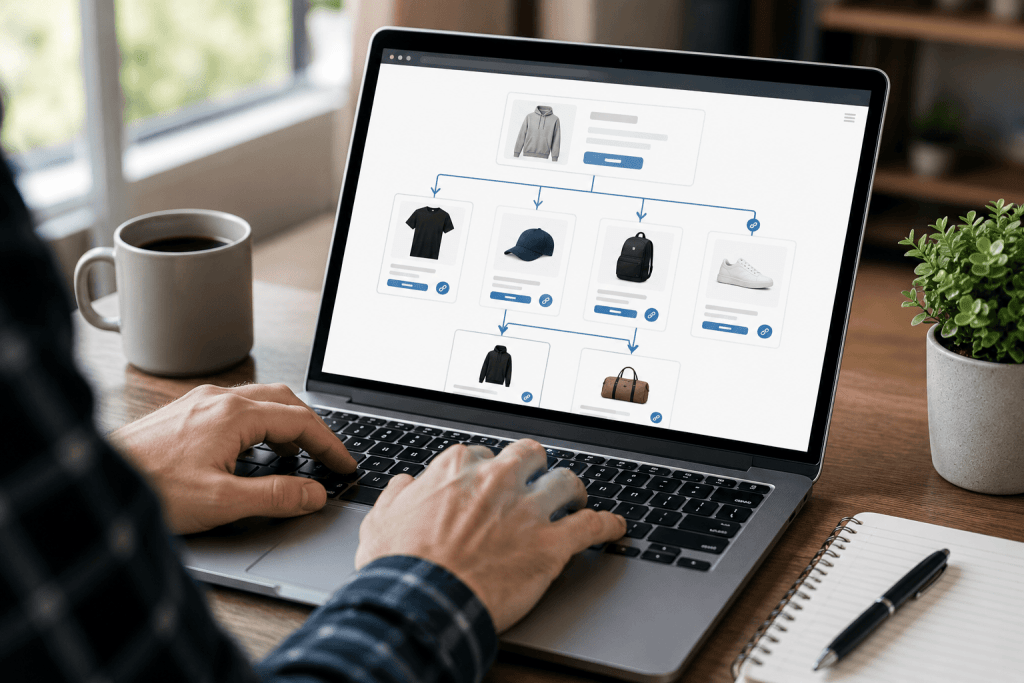
A practical internal linking structure usually includes:
Homepage Links
Link to:
- Main categories
- Best-selling collections
- Seasonal campaigns
- Priority pages
Category Pages
Link to:
- Subcategories
- Featured products
- Relevant educational content
Product Pages
Link to:
- Related items
- Complementary products
- FAQs
- Support content
Blog Pages
Link to:
- Product categories
- Commercial landing pages
- Helpful resources
Every important page should be reachable within a few clicks from the homepage.
Common Internal Linking Mistakes
Orphan Pages
Orphan pages have no internal links pointing to them.
Google may struggle to discover these pages, especially on larger websites.
Excessive Internal Links
Too many links on a single page can dilute SEO value and create a poor user experience.
Focus on relevance rather than quantity.
Weak Anchor Text
Avoid generic anchor text such as:
- Click here
- Read more
- Learn more
Instead, use descriptive phrases that clearly explain the linked page.
Example:
“Explore waterproof hiking backpacks”
This provides better context for both users and search engines.
Google uses mobile-first indexing, meaning mobile usability directly affects crawling and ranking.
Complicated mobile menus or hidden navigation structures can reduce crawl efficiency and frustrate visitors.
Professional Ecommerce Marketing services often identify mobile navigation issues during technical SEO audits because they frequently affect ecommerce performance.
Internal Linking Also Improves User Experience
Good internal linking is not only for search engines.
It also helps customers navigate your store naturally.
A visitor reading about hiking equipment may continue exploring:
- Backpacks
- Water bottles
- Hiking shoes
- Outdoor accessories
That journey feels intuitive when links are relevant and genuinely helpful.
Longer browsing sessions and smoother navigation can also improve engagement signals associated with stronger ecommerce performance.
Also Read:- Importance of Internal Links and Customer Reviews for E-commerce SEO
Final Thoughts
Internal linking remains one of the most overlooked aspects of ecommerce SEO.
Yet it directly affects how Google crawls, understands, and prioritizes your website.
A strong internal linking ecommerce strategy helps search engines discover pages faster, improves crawl efficiency, distributes authority across your store, and creates better shopping experiences for visitors.
For growing ecommerce businesses, these improvements can influence:
- Organic traffic
- Product visibility
- Indexing speed
- User engagement
- Conversion opportunities
Sometimes SEO growth does not come from publishing more content or chasing additional backlinks.
Sometimes it comes from improving the connections already inside your store.
FAQs
1. What is internal linking in ecommerce SEO?
Ans. Internal linking in ecommerce SEO means connecting pages within the same ecommerce website to improve navigation, crawlability, and search engine understanding.
2. Why is internal linking important for ecommerce websites?
Ans. Internal linking helps Google discover pages faster, improves site structure, distributes SEO authority, and enhances user experience.
3. How to improve internal linking in ecommerce for SEO?
Ans. Use logical category hierarchies, contextual blog links, related product sections, descriptive anchor text, and strong navigation systems.
4. How to set up internal linking for ecommerce SEO?
Ans. Create a clear website structure where important pages are accessible within a few clicks and connected through relevant internal links.
5. Can internal linking improve ecommerce rankings?
Ans. Yes. Effective internal linking can improve crawl efficiency, strengthen page authority distribution, and help search engines better understand page relevance.
