

At some point, every ecommerce founder hits the same strange wall.
Sales are up. Traffic is up. Ads are getting expensive (of course). Customers are browsing… but the site feels like it’s breathing through a straw.
And then someone says it:
“Maybe we need headless.”
That’s usually followed by a silence that feels way too expensive.
Because headless commerce isn’t just a tech upgrade. It’s a business bet. A bet on speed, flexibility, and future-proofing… or a bet on complexity, cost, and developer dependency.
So let’s make this decision the way founders actually should: with clarity, not buzzwords.
Headless Commerce Architecture: What It Really Means
Headless commerce is simple in theory.
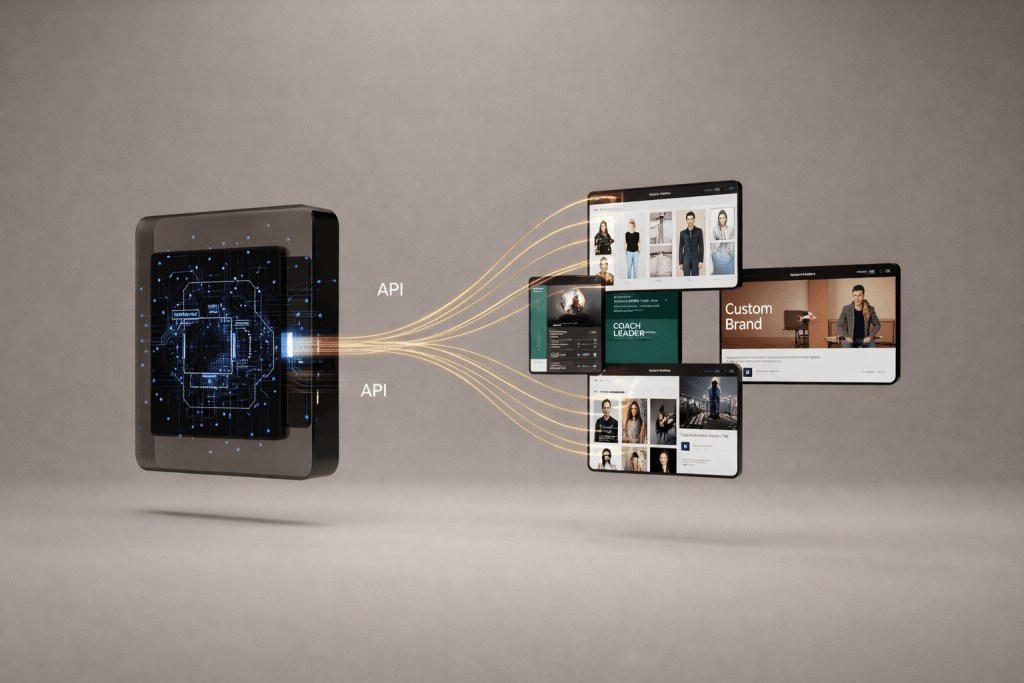
Your backend (products, checkout, orders) stays where it is.
Your frontend (the storefront experience) becomes its own independent build.
Instead of being trapped inside a theme system, everything connects through APIs.
That’s why people call it API-first ecommerce platforms.
The practical upside? You can create storefront experiences that feel less like templates and more like actual brands.
Shopify itself explains how headless architecture unlocks more flexibility for enterprise teams building beyond traditional storefront limits.
And this isn’t some niche experiment anymore.
A 2025 headless commerce trends report found that 73% of businesses are already operating with headless architecture, and almost everyone else is actively evaluating it.
So yes, it’s real. It’s growing.
But founders don’t scale businesses on trends. They scale on fit.
Shopify vs Headless Commerce: The Founder Questions That Matter
1. Are You Actually Outgrowing Shopify… or Just Annoyed?
Shopify is brilliant at what it does.
Launch fast. Sell fast. Keep the machine moving.
For most startups and SMEs, Shopify is not the problem.
The problem is usually:
- bloated apps
- slow themes
- messy customizations
- performance shortcuts taken during “just get it live” mode
That’s why Shopify Performance Optimization is often the smartest first move before rebuilding anything.
Sometimes the answer isn’t headless.
Sometimes it’s cleaning up the house you already own.
And that’s exactly where Webiators’ Shopify Development Services come in: fixing scalability issues without forcing a full platform identity crisis.
2. Do You Need Custom… or Just Different?
Here’s where custom headless commerce starts to shine.
If your brand experience needs to feel more like Nike and less like “Shopify Theme #12,” headless gives you room to breathe.
Examples where Shopify starts feeling tight:
- immersive storytelling storefronts
- regional experiences with different pricing/content
- heavy personalization
- multi-brand storefront management
- mobile-first progressive web apps
Shopify merchants are increasingly pairing Storefront APIs with headless CMS systems for exactly this reason.
If your storefront is part of your competitive advantage, headless stops being optional.
It becomes strategy.
3. Can Your Team Live With the Trade-Off?
Headless gives freedom.
It also removes training wheels.
A founder-friendly Shopify admin becomes… a developer-dependent ecosystem.
Even experienced teams have shared how headless builds can slow early progress and introduce complexity that wasn’t obvious upfront.
So ask yourself honestly:
Do you have the technical muscle (or the right partner) to maintain a decoupled stack?
If not, headless can feel like buying a race car when you needed a reliable SUV.
Webiators helps brands build headless systems that don’t collapse under their own cleverness.
4. Are You Ready for Long-Term Cost Reality?
Headless isn’t just “more expensive upfront.”
It’s more expensive in responsibility.
Want to tweak a landing page?
Developer ticket.
Want to change how collections display?
Developer ticket.
Unless you architect it well with CMS layers, you’re trading Shopify convenience for engineering control.
Some teams love that.
Some teams regret it.
Founder stories in ecommerce communities often highlight this hidden cost of ownership.
The question isn’t “Can you afford headless?”
The question is: Can you justify it?
Shopify Plus vs Headless Commerce: When Shopify Still Wins
Shopify Plus is not a lightweight tool.
For scaling brands, it offers:
- strong checkout reliability
- ecosystem maturity
- fast deployment
- less engineering overhead
- predictable scaling
If you’re growing but not reinventing ecommerce UX, Shopify Plus is often enough.
And honestly? Most brands don’t need a custom Ferrari storefront.
They need a store that loads fast, converts well, and doesn’t break during Black Friday.
That’s why many founders choose Shopify… and invest in smarter development instead of reinvention.
When to Choose Headless Commerce (No Guesswork)
Headless commerce for startups and scaling brands makes sense when:
Omnichannel Isn’t Optional
Selling across web, app, in-store, kiosks, marketplaces? Headless keeps everything consistent.
Personalization Drives Revenue
If customer journeys need to shift dynamically, headless gives you that control.
Multi-Storefront Complexity Is Rising
Running multiple regions or brands? One backend, many frontends is a serious advantage.
Speed Is a Conversion Weapon
A 2025 report highlights measurable performance and launch efficiency gains with headless adoption.
This is where headless becomes less about tech… and more about leverage.
Magento Headless Commerce vs Shopify Headless
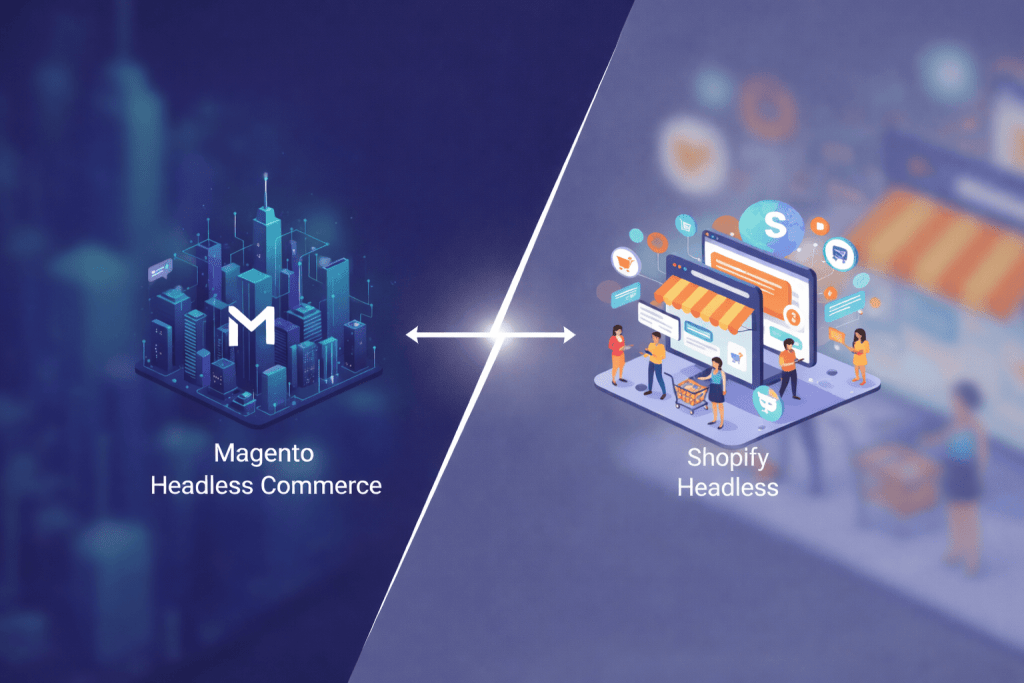
Magento headless commerce is powerful for brands needing:
- complex catalogs
- B2B workflows
- deep backend customization
Shopify headless is often cleaner for:
- fast-moving DTC brands
- simpler operational models
- ecosystem-driven growth
Choosing between them isn’t about “best platform.”
It’s about what your business actually needs to become.
Webiators provides both Magento Development Services and full-stack ecommerce development services to help founders choose wisely.
Don’t Chase Headless. Chase Fit.
Headless commerce is not the future because it’s trendy.
It’s the future because brands want freedom.
But freedom without direction is just expensive chaos.
If you’re deciding between Shopify vs custom ecommerce architecture, the best move is stepping back and asking:
What am I optimizing for?
Speed to market? Shopify.
Differentiated experience? Headless.
B2B complexity? Magento headless.
Scaling without breaking? Strategy first.
And if you want a partner who builds ecommerce the way founders think, Webiators is ready.
Let’s map your stack, your growth, and your next move.
FAQs
1. What is headless commerce?
Ans. Headless commerce separates frontend design from backend commerce systems using APIs.
2. Shopify vs headless commerce: which is better?
Ans. Shopify is best for speed and simplicity. Headless is best for flexibility and advanced UX.
3. When should startups choose headless commerce?
Ans. When storefront experience and omnichannel expansion are core growth drivers.
4. What are Shopify limitations for scaling brands?
Ans. Theme constraints, app bloat, and limited frontend flexibility at high customization levels.
5. Is Magento headless commerce stronger than Shopify?
Ans. Magento offers deeper backend customization, especially for B2B, but requires heavier development.
