
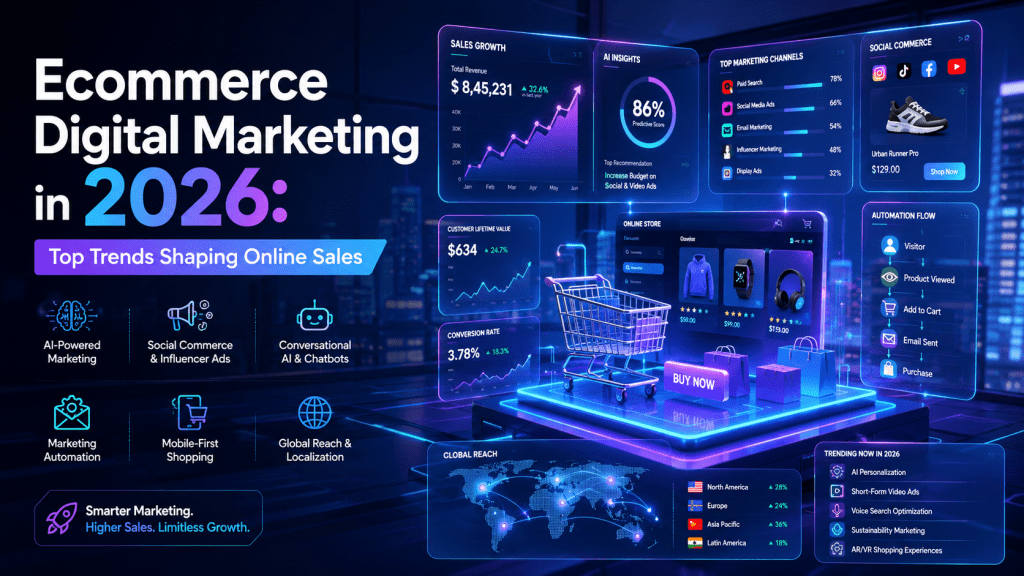

Every year, ecommerce feels like it moves a little faster than the last, but 2026 is shaping up to be one of those turning-point moments. You can feel it already. Online shoppers aren’t just browsing anymore. They’re comparing, chatting, asking, expecting. And brands? They’re juggling tech, analytics, and rising expectations while trying to make every click count.
If you’ve been wondering how to keep up with the shift, or maybe even get ahead of it, you’re in the right place. Let’s talk about what’s really changing in ecommerce digital marketing and how you can ride the waves instead of getting wiped out by them.
AI Steps Into the Spotlight of Ecommerce Digital Marketing
Artificial intelligence has been around for years, but 2026 is the year it becomes impossible for retailers to ignore. Not the “recommend a pair of socks with your sneakers” kind of AI, but something far more intuitive.
Shoppers now expect personalization that feels natural, not creepy or generic. AI can finally deliver that. It tracks buying habits, mood, browsing patterns, and even real-time intent. The result? Product recommendations that don’t feel like recommendations at all. They feel more like helpful nudges from a sales rep who genuinely gets you.
For brands, this shift means smarter inventory planning, sharper ads, and fewer wasted marketing dollars. You’ll see AI-driven tools sitting at the center of every winning digital sales strategy in 2026.
And if your store still feels like it’s guessing what customers want, it might be time for an upgrade. Many businesses are already working with Ecommerce development services providers to integrate AI into their platforms.
The New Age of Search: Zero-Click, Voice, and Visual Discovery
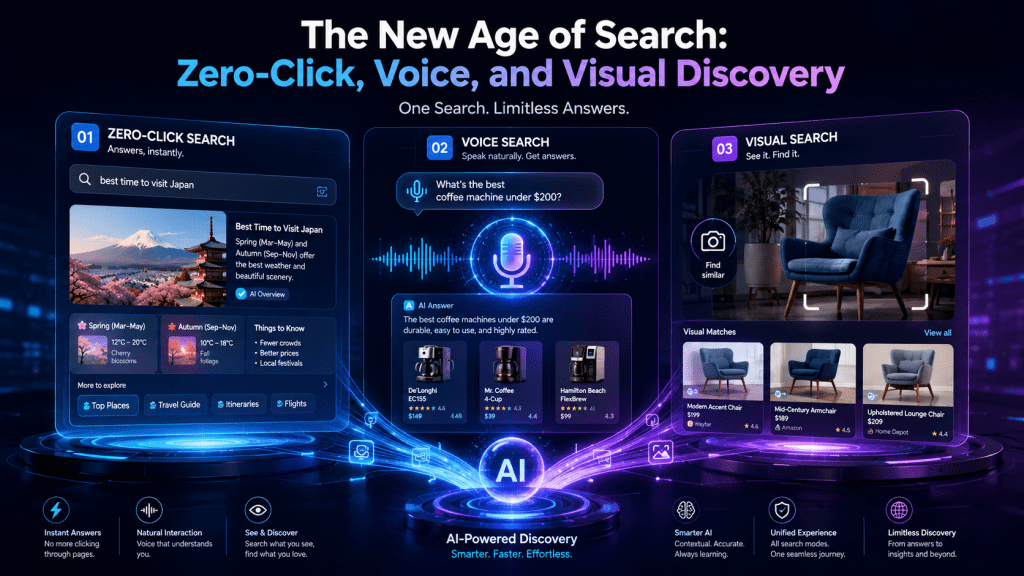
Search isn’t just about typing keywords anymore. People are searching with their thumbs, their voices, and screenshots of whatever caught their eye.
In 2026, zero-click searches are everywhere. Shoppers ask a question and expect the answer without needing to dive into five different tabs. This is forcing brands to rethink SEO.
Voice search, boosted by smarter home assistants, is making product discovery feel more conversational. And visual search? Well, let’s just say online retail marketing in 2026 looks a lot more like real-world window shopping. Someone spots a jacket on a friend, snaps a quick photo, and boom—dozens of similar options pop up.
For ecommerce stores, optimizing product listings for visual and voice search isn’t a “nice to have” anymore. It’s the new cost of entry.
Also Read – Ecommerce SEO for Beginners: A Simple Step-by-Step Guide for 2026
Social Shopping: Where Browsing Turns Into Buying
Social media used to be the warm-up before customers entered your store. Now it is the store.
In 2026, the majority of impulse purchases happen inside social platforms. Not on websites. Not through search. Right inside someone’s TikTok feed at 11 p.m. when they’re winding down after a long day.
Livestream shopping is booming again, but this time creators aren’t just promoting products. They’re co-creating them with brands. People trust influencers more than paid ads, so the lines between entertainment, community, and commerce keep blurring.
If you’re not building a strong social commerce presence, you’re handing your competitors free customers every single day.
Privacy-First Marketing: Winning Trust Without Tracking Everything
With all the talk about data, personalization, and tracking, you might expect 2026 to feel invasive. But actually, the opposite is happening.
Privacy laws are tightening. Users are pushing back against constant tracking. Browsers are blocking more cookies. And it’s forcing brands to get creative.
Instead of stalking customers around the internet, businesses are:
- Encouraging first-party data collection through loyalty programs
- Offering personalization options where users choose how much they want to share
- Building communities where trust, not tracking, drives engagement
The message is clear. Respect the customer, and they’ll reward you with loyalty. Abuse their trust, and they’ll vanish.
The Era of Lightning-Fast Experiences
Slow pages? People won’t tolerate them anymore. A single extra second of loading time can kill a sale. This isn’t news, but the pressure is higher than ever.
By 2026, shoppers expect:
- Instant page loads
- Smooth micro-interactions
- Frictionless checkout
- Multiple payment options, including digital wallets and BNPL
- Personalized content that doesn’t slow the site down
Brands are investing heavily in Ecommerce development services to rebuild outdated sites and keep up with industry standards. Because no matter how good your product is, a clunky website can ruin everything.
Customer Support That Feels Human Again
Funny thing about tech trends: the more advanced things get, the more people crave sincerity.
That’s why customer support in 2026 is becoming friendlier, faster, and more human, even when AI is involved. Chatbots aren’t stiff anymore. They understand tone. They catch frustration. They escalate issues quickly instead of keeping customers stuck in loops.
Brands are also pairing AI assistance with real-person touches like proactive outreach and personalized follow-ups. Because a satisfied customer is worth far more than a one-time sale.
Sustainable Choices Shape Buying Decisions
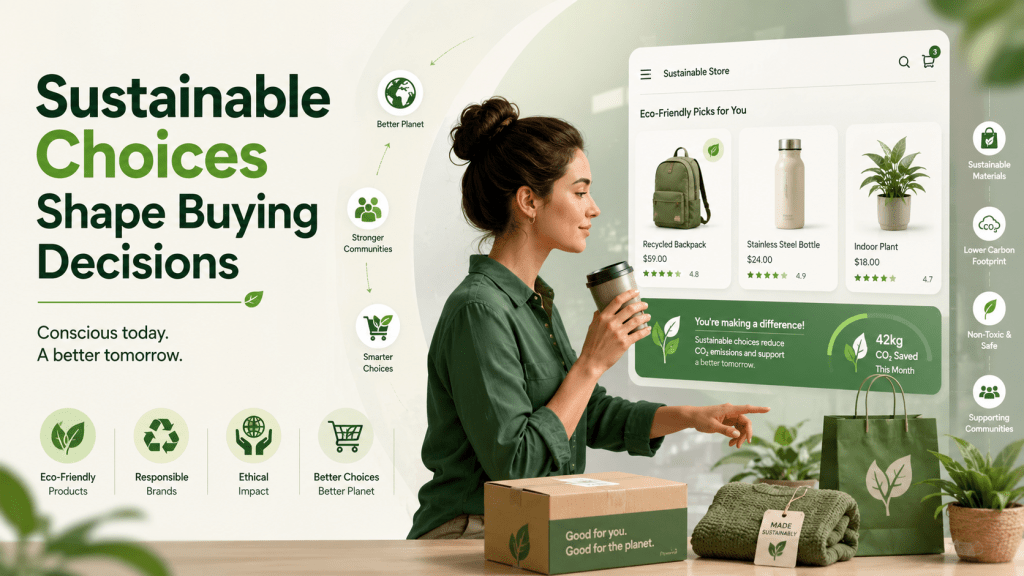
Maybe it’s cultural shifts. Maybe it’s climate anxiety. Maybe it’s simply that people want to feel like their money is doing some good. Whatever the reason, sustainability carries more weight than ever.
Shoppers check eco-labels. They read about waste reduction efforts. They notice if your packaging is recyclable or if your brand supports ethical sourcing.
This trend isn’t going anywhere. If your ecommerce store ignores sustainability, customers may ignore your brand.
Also Read – MERN Stack 2026: Build Full-Stack Apps with MongoDB, Express, React & Node
So What Should Brands Do in 2026?
Three things:
- Modernize your tech stack
Integrate AI, improve site speed, and upgrade your ecommerce platform through reliable partners.
- Invest in smarter marketing
Think beyond ads. Look at digital sales strategy, first-party data, and trust-driven engagement.
- Partner with specialists
Webiators offer Ecommerce Marketing services, know the ecosystem, the tools, and the trends. We help you apply them correctly rather than guessing your way through.
Staying competitive in 2026 doesn’t require reinventing your brand. It requires being responsive, thoughtful, and willing to evolve.
Conclusion
Ecommerce digital marketing in 2026 isn’t just about chasing trends. It’s about understanding people. Technology is growing at lightning speed, but the heart of every great shopping experience remains the same: Make customers feel understood, supported, and valued.
If you can do that while keeping up with the newest tools and expectations, you won’t just survive the year. You’ll grow faster than you expected.
FAQs
1. What is the biggest ecommerce digital marketing trend in 2026?
Ans. AI-powered personalization is leading the pack. It influences recommendations, pricing, search, and customer engagement across the entire buying journey.
2. How important is visual search now?
Ans. Very. Shoppers use photos and screenshots to discover products, so optimizing for visual search boosts visibility and conversions.
Ans. More than ever. Social commerce, creator partnerships, and livestream selling are key elements of online retail marketing in 2026.
4. Does my ecommerce store really need AI tools?
Ans. If you want accurate targeting, better inventory decisions, and smarter campaigns, yes. AI is becoming a core part of any successful digital sales strategy.
How can I prepare my business for 2026 trends?
Ans. Work with experts in Ecommerce development services and Ecommerce Marketing services to upgrade technology, strengthen SEO, and build scalable marketing systems.
