
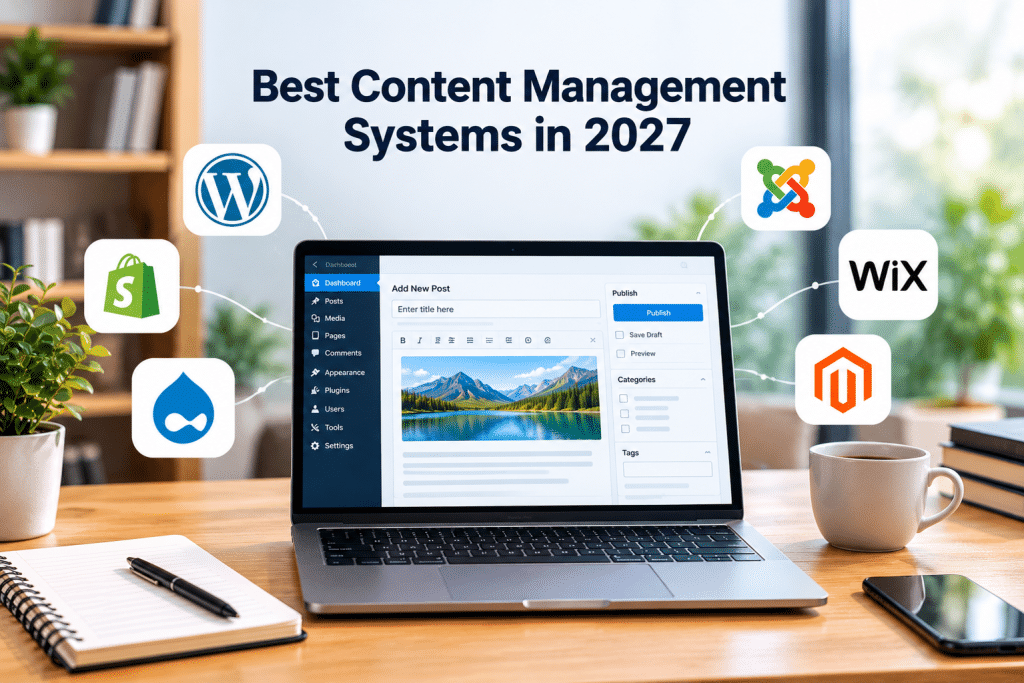

Choosing the right content management system can feel a lot like picking a long term healthcare provider. You want something stable, trustworthy, and flexible enough to grow with you. A CMS mistake may not land you in the ER, but it can quietly drain your budget, slow your team, and hurt your online visibility over time.
By 2027, the digital landscape is more demanding than ever. Patients expect fast pages. Customers want frictionless shopping. Search engines reward clarity and structure. All of that depends heavily on the content management system software running behind the scenes.
So let’s talk honestly about the best content management systems in 2027, without hype, without tech jargon overload, and with real world clarity.
Why the Best Content Management Systems Matter More in 2027
A modern website content management system does more than publish blogs. It manages trust. It shapes how users feel when they land on your site. It decides whether your ecommerce checkout feels smooth or stressful.
CMS platforms in 2026 must handle speed, security, scalability, SEO readiness, and personalization. Businesses that treat CMS selection casually often feel the pain later. Slower updates. Plugin chaos. Rising maintenance costs. Sound familiar?
The right CMS feels almost invisible. Your team works faster. Your users stay longer. Google notices.
WordPress Still Leads for Flexibility and Content Depth
WordPress continues to dominate for good reason. It has matured beautifully over the years and remains one of the best content management systems for businesses that rely on content marketing, SEO, and customization.
Healthcare blogs, service websites, and knowledge driven platforms thrive here. The ecosystem is massive. Developers are everywhere. Integrations are endless.
WordPress works especially well when paired with professional Search Engine Optimization Services because of its clean structure, customizable metadata, and publishing control.
That said, WordPress does require discipline. Too many plugins can feel like too many supplements taken without a doctor’s advice. With proper development and maintenance, it remains a powerhouse in 2026.
Best for: Content heavy sites, SEO driven businesses, service providers
Watch out for: Poor hosting choices and plugin overload
Shopify Dominates CMS for Ecommerce Websites
When ecommerce is your lifeline, Shopify feels like a well designed clinic where everything is labeled, clean, and optimized for patient flow.
Shopify is one of the most reliable CMS platforms for ecommerce websites in 2027. Security, hosting, payments, and scalability are baked in. You focus on selling. Shopify handles the infrastructure stress.
For brands using professional Ecommerce development services, Shopify becomes even more powerful. Custom storefronts, headless builds, and advanced integrations push it far beyond basic templates.
The tradeoff? Less freedom compared to open source systems. But for many businesses, that structure is a relief, not a limitation.
Best for: Online stores, DTC brands, subscription models
Watch out for: Platform fees and limited backend customization
Also Read – SEO vs Paid Ads: Which Is Better for Ecommerce Growth
Webflow Bridges Design and Control Gracefully
Webflow feels like a precision tool. Designers love it. Marketers appreciate it. Developers respect it.
As a website content management system, Webflow shines in visual control and performance. You get clean code, fast loading pages, and CMS flexibility without heavy plugins, making it a strong choice for businesses offering performance marketing services.
In 2027, Webflow is increasingly chosen by startups and agencies that want pixel level control without sacrificing SEO fundamentals. It integrates smoothly with Ecommerce Marketing services and analytics tools.
The learning curve exists, but once mastered, it feels empowering rather than frustrating.
Best for: Design focused brands, marketing websites
Watch out for: Smaller plugin ecosystem and higher learning curve
Drupal Remains the Enterprise Grade CMS Choice
Drupal is like a specialist surgeon. Highly skilled. Extremely powerful. Not for casual use.
Large healthcare organizations, government portals, and enterprise platforms continue to rely on Drupal as one of the best content management systems for complex data handling and security compliance.
Drupal’s strength lies in structured content, user permissions, and scalability. It excels where regulation and governance matter.
However, Drupal demands experienced developers. Without proper expertise, it can feel overwhelming.
Best for: Enterprises, healthcare portals, high security needs
Watch out for: Development complexity and cost
Headless CMS Platforms Gain Serious Momentum
Headless CMS platforms like Contentful, Strapi, and Sanity are no longer niche tools. In 2027, they are mainstream for businesses prioritizing omnichannel delivery.
A headless content management system software separates content from presentation. That means your content flows seamlessly to websites, mobile apps, kiosks, and even voice interfaces.
For tech forward brands working with advanced Ecommerce development services, headless CMS offers unmatched flexibility and speed.
The challenge lies in setup and integration. This is not a plug and play solution. It rewards planning and technical clarity.
Best for: Omnichannel brands, custom digital ecosystems
Watch out for: Higher initial complexity
Magento for Complex Ecommerce Operations
Magento, now Adobe Commerce, still holds its ground for complex ecommerce ecosystems. Large catalogs, multi language stores, and custom workflows thrive here.
Magento is a serious CMS for ecommerce websites that demand control over every operational detail. With the right development partner, it becomes incredibly powerful.
Without expertise, it can feel heavy. Performance optimization is critical.
Best for: Large scale ecommerce, B2B platforms
Watch out for: Resource intensive builds
Also Read – What Is GEO? How to Optimise for AI Search Engines
How to Choose the Best CMS Systems for Your Business
Here is the truth most blogs avoid. There is no universal best CMS Systems. The best content management systems are context driven.
Ask yourself:
Do you prioritize content publishing or selling products?
Is speed or customization more critical?
Does your team have technical support?
Will you invest in long term SEO and growth?
A healthcare clinic blog does not need the same CMS as a multi country ecommerce brand. Matching CMS capabilities to business goals saves years of frustration.
The Human Side of CMS Decisions
Behind every CMS choice is a team trying to work efficiently. Writers want ease. Developers want stability. Marketers want data. Users want clarity.
When your CMS supports those human needs, growth feels natural. When it fights them, burnout follows.
That is why working with experts offering Search Engine Optimization Services, Ecommerce Marketing services, and PPC management services can turn a good CMS into a great digital foundation.
Final Thoughts on the Best Content Management Systems in 2027
Technology keeps evolving, but trust still matters most. The best content management systems in 2026 are the ones that quietly support your goals without stealing your time or energy.
Choose wisely. Invest thoughtfully. And remember, a CMS should feel like a reliable partner, not a daily struggle.
If you are planning growth, redesign, or ecommerce expansion, aligning your CMS with professional Ecommerce development services can make all the difference.
FAQs
1. What is the best content management system overall in 2026?
Ans. There is no single best option. WordPress, Shopify, Webflow, and headless CMS platforms lead in different use cases depending on business needs.
2. Which CMS is best for ecommerce websites?
Ans. Shopify and Magento are top choices for CMS for ecommerce websites, depending on store size and customization requirements.
3. Is WordPress still relevant in 2026?
Ans. Yes. WordPress remains one of the best content management systems for SEO focused and content driven websites.
4. What is a headless content management system?
Ans. A headless CMS separates content from design, allowing content delivery across multiple platforms like websites and mobile apps.
5. Do I need professional help to choose a CMS?
Ans. Often yes. Experts offering Search Engine Optimization Services and Ecommerce development services help align CMS choices with long term business goals.
