
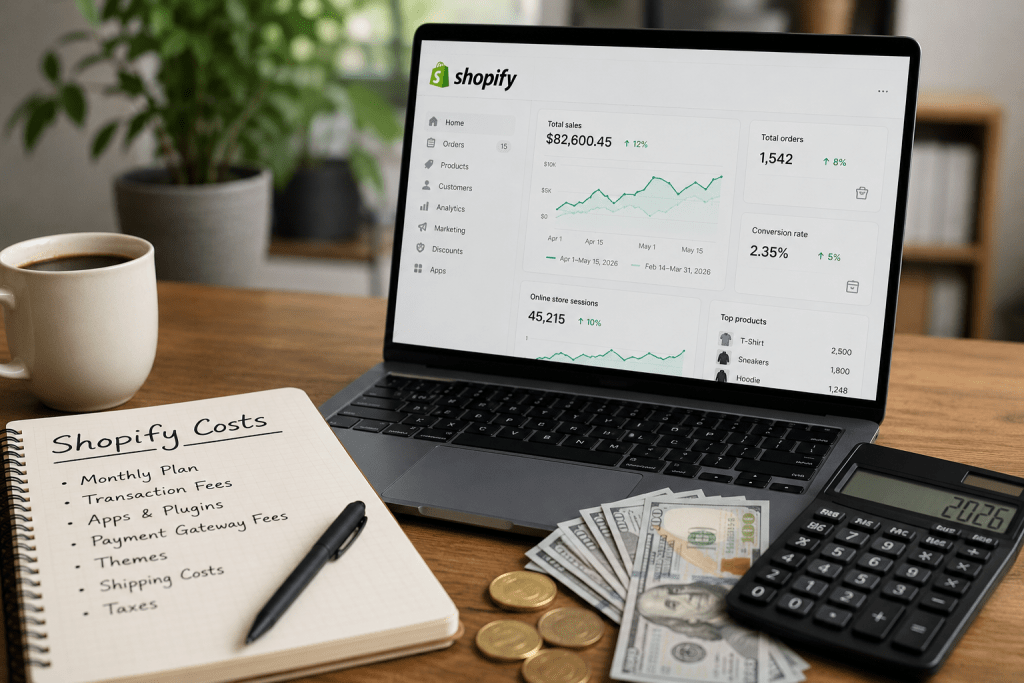

Shopify powers millions of ecommerce stores worldwide, but its pricing is often misunderstood. On the surface, it appears simple: choose a plan, build a store, and start selling.
In reality, the true Shopify development cost in 2026 depends on how the store is structured, which tools are used, and how aggressively the business scales.
Most store owners do not struggle with Shopify itself. They struggle with the ecosystem built around it.
Shopify pricing breakdown (official structure explained)
Shopify offers four main pricing tiers:
- Basic
- Grow
- Advanced
- Plus
Each plan includes:
- Ecommerce website builder
- Secure hosting
- Checkout system
- Basic analytics and reporting
However, this is only the base subscription and not the total Shopify website development cost.
Shopify store development cost (what businesses actually spend)
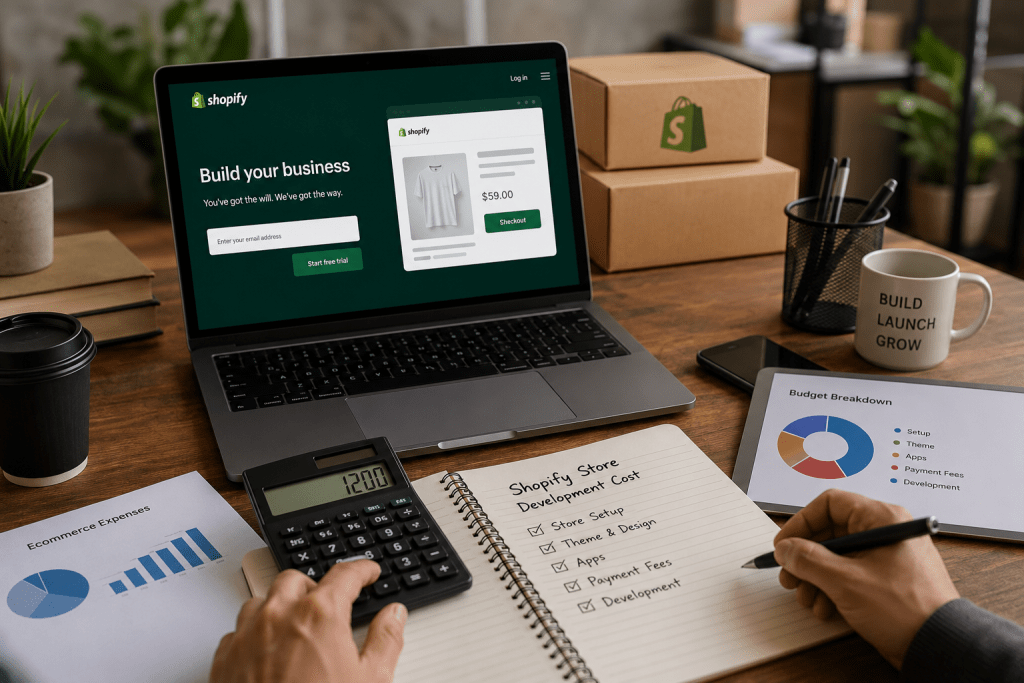
Building a functional store involves multiple layers beyond subscription fees.
1. Store setup and structure
This includes:
- Product organization
- Navigation and category setup
- UX and conversion flow design
- Checkout configuration
This foundation directly impacts sales performance.
2. Theme and design cost
Shopify provides free and paid themes.
Costs vary depending on:
- Free vs premium themes
- Custom UI and branding requirements
- Mobile responsiveness optimization
Premium themes may require one-time purchases and additional customization.
3. App ecosystem cost (major ongoing expense)
Most Shopify stores rely on third party apps for extended functionality.
Common categories include:
- Email marketing automation
- SEO optimization tools
- Upsell and conversion optimization apps
- Inventory and fulfillment integrations
Each app adds a recurring monthly cost, which can significantly increase total expenses over time.
4. Payment processing fees (important clarification)
Shopify supports Shopify Payments in eligible regions.
Key facts:
- Shopify does NOT charge additional transaction fees when Shopify Payments is used in eligible regions
- Standard credit card processing fees still apply based on payment networks and country regulations
- Using third party payment gateways may result in additional transaction fees depending on the plan
5. Development and integrations
Advanced ecommerce stores often require:
- ERP and CRM integration
- Custom checkout features
- Workflow automation
- API-based systems
This is where Shopify store development cost increases significantly for scaling businesses.
Hidden Shopify costs most businesses overlook
These are not hidden charges from Shopify, but commonly underestimated operational expenses.
1. App stacking costs
Using multiple paid apps increases monthly overhead and creates long term dependency.
2. Premium themes and customization
One-time theme purchases plus ongoing developer customization can add to costs.
3. Maintenance and optimization
Includes performance improvements, bug fixes, and system updates.
4. Growth tools
CRO tools, analytics platforms, and testing tools often become essential as traffic grows.
Why Shopify feels expensive over time
Shopify is not a fixed-cost platform. It is a scalable ecosystem.
1. Modular system design
Features are added through apps instead of being bundled into one system.
2. Business scaling requirements
Higher traffic requires better tools, automation, and infrastructure.
3. Performance optimization needs
Successful stores invest in speed, UX, and conversion improvements.
As a result, Shopify pricing expands naturally with business growth.
Shopify Store Cost in the USA (Realistic 2026 Cost Breakdown)
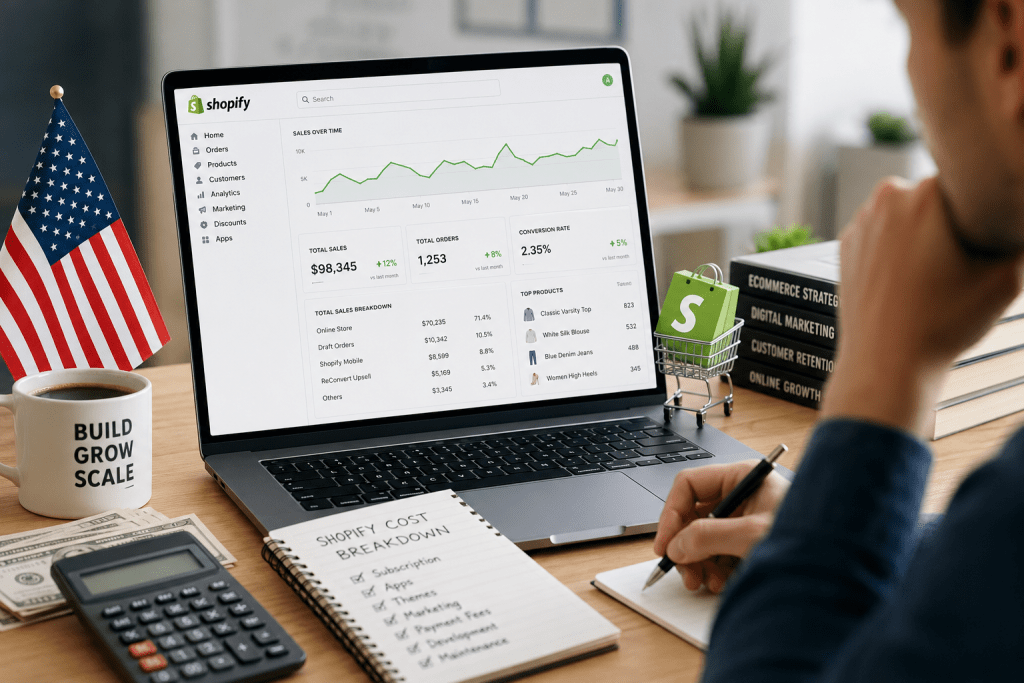
One of the most common questions business owners ask is: “How much does a Shopify store really cost in the USA?”
The honest answer is that Shopify costs vary significantly based on your business stage, customization needs, and growth goals. While Shopify’s monthly subscription is the foundation, the total cost typically includes themes, apps, payment processing fees, marketing tools, and development work.
Here’s what a realistic cost breakdown looks like for most U.S. businesses in 2026.
Startup Shopify Stores
These are new businesses testing products, validating ideas, or launching their first online store.
Typical monthly costs:
- Shopify subscription
- Basic payment processing fees
- Free or low-cost theme
- Essential apps only
Estimated monthly operating cost: $50 to $300+
Estimated initial setup cost: $0 to $2,500+
Many startups begin with a lean setup to keep overhead low. The focus is usually on getting products online quickly and generating initial sales before investing in advanced functionality.
Growing Ecommerce Businesses
At this stage, businesses have consistent sales and need better automation, customer retention tools, and conversion optimization.
Common investments include:
- Email marketing platforms
- Loyalty and rewards programs
- Upsell and cross-sell tools
- Advanced analytics
- Professional design improvements
Estimated monthly operating cost: $300 to $1,500+
Estimated development and optimization investment: $2,500 to $15,000+
This is where many businesses begin to notice the real Shopify development cost. The store itself remains affordable, but the supporting tools required to increase revenue often become a significant expense.
For example, a brand generating $50,000 to $100,000 per month in revenue may rely on multiple paid apps, marketing integrations, and ongoing optimization efforts to stay competitive.
Enterprise and High-Growth Brands
Large ecommerce businesses typically require custom functionality, advanced integrations, and dedicated development support.
Common requirements include:
- ERP integration
- CRM synchronization
- Multi-location inventory management
- Subscription systems
- International storefronts
- Advanced automation workflows
Estimated monthly operating cost: $1,500 to $10,000+
Estimated development investment: $15,000 to $100,000+
For enterprise brands, Shopify is no longer just a website platform. It becomes a core business infrastructure that supports operations, marketing, customer service, and fulfillment.
Shopify Cost Comparison by Business Stage
| Business Stage | Monthly Cost Range | Setup/Development Cost |
| Startup Store | $50 to $300+ | $0 to $2,500+ |
| Growing Business | $300 to $1,500+ | $2,500 to $15,000+ |
| Enterprise Brand | $1,500 to $10,000+ | $15,000 to $100,000+ |
Note: These cost ranges are industry-based estimates compiled from common ecommerce development projects and publicly available Shopify ecosystem pricing. Actual costs vary based on store complexity, custom functionality, third-party software, business requirements, and agency rates.
What Increases Shopify Costs the Most?
In many Shopify implementations, the biggest cost drivers are rarely the Shopify subscription itself. The largest expenses usually come from:
- Custom design and development
- Third-party app subscriptions
- ERP and CRM integrations
- Conversion rate optimization (CRO)
- Email and SMS marketing platforms
- Ongoing maintenance and support
In many cases, businesses spend more on apps and operational tools than on their Shopify plan.
Quick Answer: Most Shopify stores in the United States spend between $50 and $1,500+ per month on platform fees, apps, marketing tools, and operational software. Businesses requiring custom development, advanced integrations, or enterprise functionality can invest significantly more.
Is Shopify worth it in 2026?
Yes, for most ecommerce businesses, especially those focused on scaling.
Key advantages include:
- Reliable infrastructure and hosting
- Strong checkout conversion system
- Global scalability
- Large ecosystem of apps and integrations
- Secure payment processing
However, value depends entirely on execution. A poorly structured store becomes expensive. A well optimized store delivers strong ROI.
How to reduce Shopify cost effectively
Cost control is about strategy, not limitation.
Practical methods include:
- Using multifunction apps instead of multiple single purpose tools
- Leveraging built in Shopify features first
- Avoiding unnecessary custom development in early stages
- Regularly auditing app subscriptions
- Choosing lightweight, performance optimized themes
Professional planning through Shopify Development Services helps reduce long term inefficiencies caused by poor architecture.
Why expert setup matters for cost control
A properly structured store prevents unnecessary future expenses.
Services like Shopify Store Setup help businesses:
- Reduce app dependency
- Improve conversion-focused structure
- Build scalable foundations
For platform transitions, Shopify Migration Services ensures safe and stable data migration.
For larger ecosystems, E-commerce development services integrate Shopify with broader business systems for better scalability.
Common Shopify Cost Mistakes to Avoid
- Installing multiple apps that perform similar functions
- Purchasing premium themes before validating products
- Overinvesting in custom development during the launch phase
- Ignoring ongoing maintenance and optimization costs
- Choosing tools without considering long-term scalability
Read Also:- The Ultimate Guide to Shopify Payment Methods: Everything You Need to Know in 2026
FAQs
What is the cheapest way to build a Shopify store?
Start with the Basic Shopify plan, use a free theme, and limit apps in the early stage.
Does Shopify have transaction fees?
Shopify does not charge additional transaction fees when Shopify Payments is used in eligible regions. Standard processing fees still apply.
Can Shopify cost be reduced?
Yes. Costs can be reduced by minimizing apps, using built in features, and avoiding unnecessary customization.
What increases Shopify cost the most?
Apps, third party tools, custom development, and scaling infrastructure are the biggest cost drivers.
Is Shopify better than other ecommerce platforms for cost efficiency?
It depends on scale. Shopify is highly efficient for growing businesses when properly managed and optimized.
Final takeaway
The Shopify development cost in 2026 is not a fixed number. It is a flexible ecosystem that evolves with business growth.
The platform itself is predictable. The variation comes from how efficiently the store is designed, optimized, and scaled.
Businesses that plan properly maintain control over costs. Those that don’t often experience rising operational expenses.
In ecommerce, long term success is not about spending less. It is about spending wisely.
