
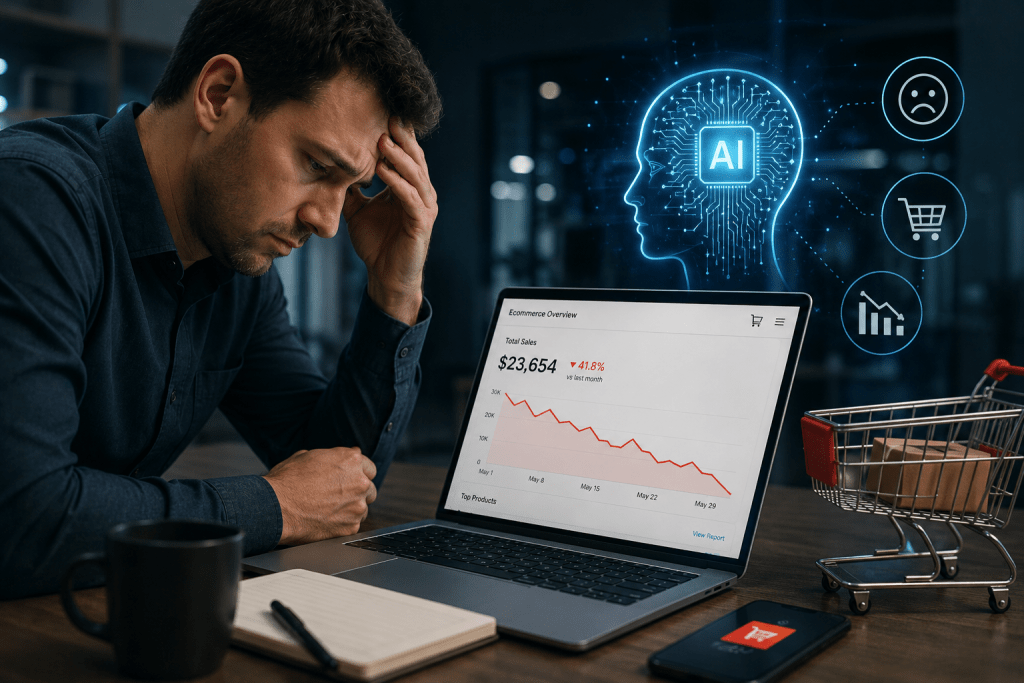

Online stores have more tools than ever before.
AI chatbots answer customer questions in seconds. Product descriptions can be generated instantly. Personalized recommendations appear automatically. Yet many businesses are still dealing with an ecommerce sales drop.
That frustrates store owners because the expectation was simple: more AI should mean more sales.
But that’s not what’s happening.
A growing number of ecommerce brands are relying too heavily on automation while ignoring something customers still care deeply about: trust.
People shop faster today, but they still make emotional decisions. If a website feels confusing, robotic, slow, or unreliable, shoppers leave. It only takes a few seconds.
The real issue is not AI itself. The issue is using AI without improving the customer experience.
The Biggest AI Mistake Ecommerce Stores Are Making
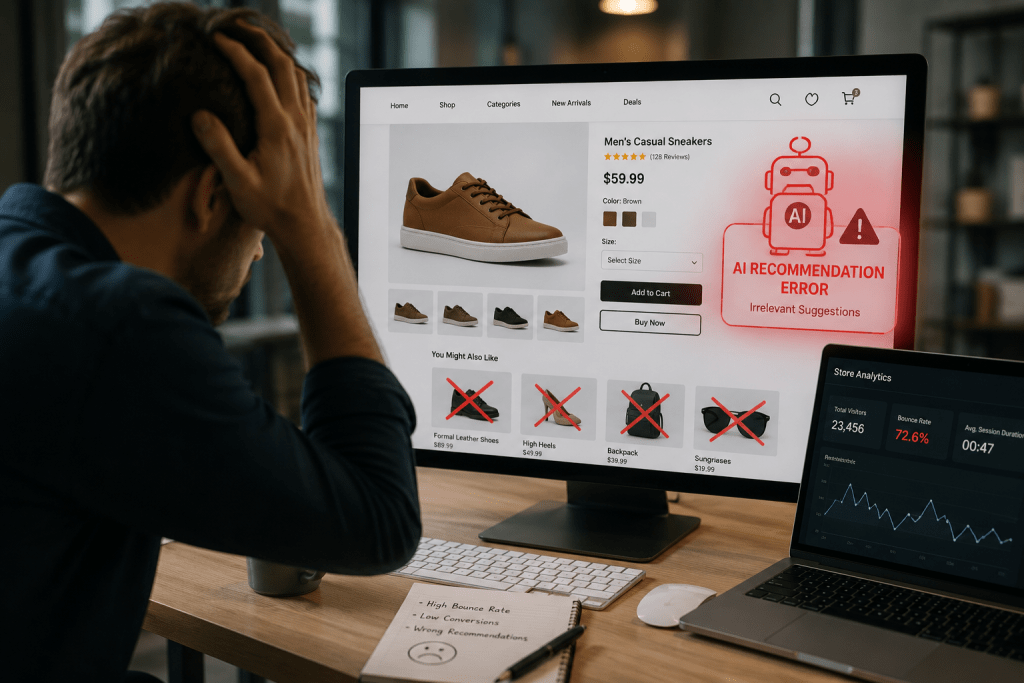
Many online stores started using AI tools to save time and reduce costs. That part makes sense.
Problems begin when businesses automate everything without reviewing how it affects shoppers.
Common examples include:
- Generic product descriptions with little useful detail
- Chatbots that cannot answer real customer concerns
- Too many popups and automated recommendations
- AI-written blogs with no original expertise
- Poorly optimized mobile experiences
Customers notice these problems quickly.
If a shopper visits a product page and finds vague information, they usually leave and compare another store instead. Ecommerce competition is too strong in 2026 for weak customer experiences to survive.
Why Low Ecommerce Conversion Rates Are Increasing
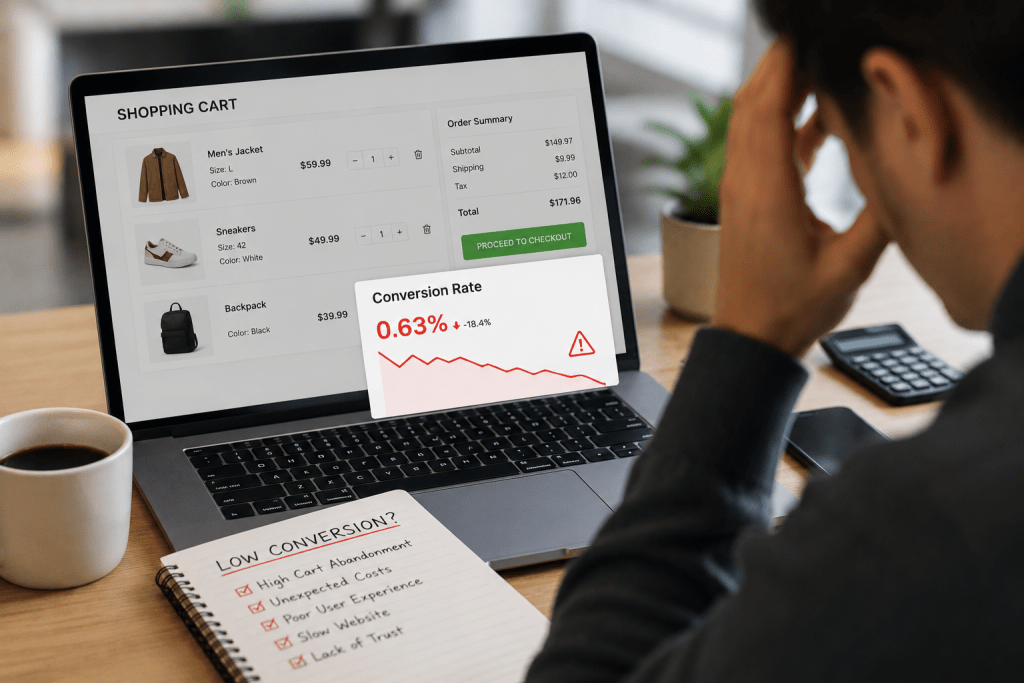
A low ecommerce conversion rate is often connected to usability problems, not traffic problems.
Many businesses spend heavily on ads while ignoring issues inside the website itself.
Weak Product Pages Reduce Buyer Confidence
Customers want clarity before spending money online.
A strong product page should answer practical questions immediately:
- What makes this product useful?
- Who is it best for?
- What materials or features does it include?
- How long does shipping take?
- Are returns simple?
Short AI-generated descriptions usually fail to build trust because they sound generic.
For example, saying “high-quality premium product” tells shoppers almost nothing. Specific details and realistic explanations convert better because they help customers make decisions faster.
Too Much Automation Creates Friction
Automation should simplify shopping, not interrupt it.
Some ecommerce websites overload customers with:
- Multiple popups
- Constant discount alerts
- Aggressive upsell messages
- Complicated chatbot flows
Instead of helping shoppers, these features often distract them.
Clean websites with simple navigation and fast checkout processes usually perform better. Customers want an easy buying experience, especially on mobile devices.
This is why businesses investing in professional Ecommerce development services often see better customer retention and stronger conversion rates.
Poor AI Content Is Hurting SEO Performance
Search rankings are becoming harder to maintain with low-quality content.
Many stores publish large amounts of AI-generated blogs and category pages without adding useful expertise or original insights. As a result, pages struggle to rank well, and users leave quickly.
Here are some common SEO issues affecting ecommerce stores:
| Problem | Result |
| Thin product descriptions | Lower search visibility |
| Repetitive AI content | Weak engagement |
| Slow website speed | Higher bounce rates |
| Poor mobile optimization | Lost mobile sales |
| Keyword stuffing | Reduced readability |
Search engines reward content that is genuinely useful and easy to understand.
That’s why many brands now focus more on quality content strategies and professional Ecommerce Marketing services instead of publishing large amounts of low-value content.
Customers Still Want Human Support
AI chatbots can improve response times, but they should not fully replace customer service teams.
Some customer questions require human support, especially for:
- Expensive purchases
- Shipping concerns
- Technical products
- Warranty questions
- Return issues
When shoppers cannot get clear answers, trust drops quickly.
The most successful ecommerce brands use AI to support customer service, not replace it completely.
Website Performance Matters More Than Ever
Another major reason behind an ecommerce sales drop is poor website performance.
If pages load slowly or the checkout process feels difficult, customers leave before completing their purchases.
This is even more important on mobile devices, where most ecommerce traffic now comes from.
Businesses using reliable platforms and optimized development strategies often perform better because customers can browse and buy without frustration.
Solutions like Shopify Development Services and Magento Development Services help businesses improve:
- Site speed
- Mobile responsiveness
- Checkout performance
- SEO structure
- Scalability
A stable ecommerce website creates a smoother shopping experience, which directly supports sales growth.
Smart Ecommerce Brands Use AI Carefully
The ecommerce businesses growing successfully in 2026 are not avoiding AI completely.
They are simply using it more carefully.
Instead of replacing every customer interaction, they use AI for practical improvements such as:
- Inventory forecasting
- Customer behavior analysis
- Faster support responses
- Personalized product suggestions
- Workflow automation
At the same time, they continue focusing on human-centered experiences.
That balance matters.
Customers still buy from brands they trust, understand, and feel comfortable purchasing from.
Final Thoughts
Many ecommerce businesses assume AI alone will solve conversion problems.
It won’t.
A successful ecommerce store still depends on strong customer experience, useful content, fast website performance, and clear communication.
That is why many brands experiencing an ecommerce sales drop are now rethinking how they use automation.
AI works best when it supports the shopping experience instead of controlling it completely.
The stores performing well in 2026 are combining smart technology with genuine customer-focused strategies. That combination builds trust, improves conversions, and supports long-term growth.
FAQs
1. Why are ecommerce stores losing sales in 2026?
Ans. Many stores are struggling because of poor customer experience, weak website performance, overuse of automation, and low-quality AI-generated content.
2. Can AI reduce ecommerce conversion rates?
Ans. Yes. Poorly implemented AI tools can confuse customers, reduce trust, and create friction during the shopping process.
3. What causes low ecommerce conversion rates?
Ans. Common causes include slow websites, unclear product information, difficult checkout experiences, weak mobile optimization, and poor customer support.
4. Why is website speed important for ecommerce?
Ans. Slow-loading websites increase bounce rates and reduce conversions because customers expect fast and smooth shopping experiences.
5. How can ecommerce businesses improve sales performance?
Ans. Businesses can improve sales by optimizing website speed, simplifying navigation, improving product content, strengthening SEO, and investing in professional Ecommerce development services.
