
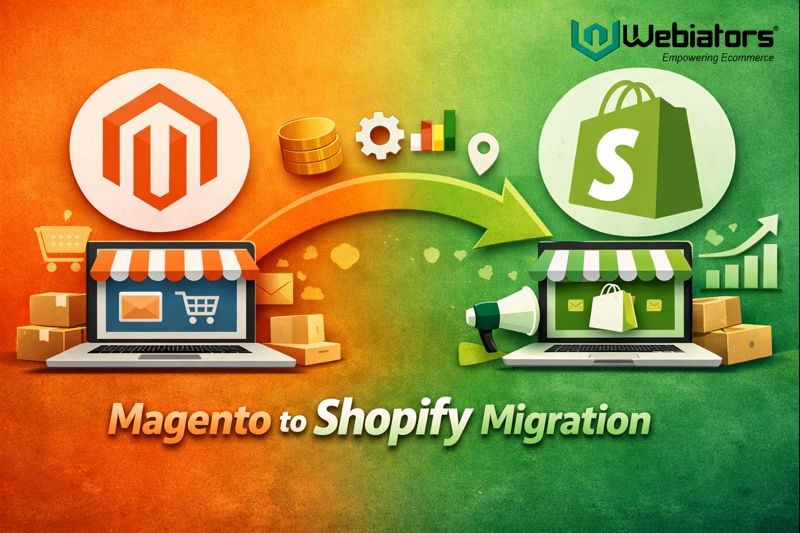

You’ve probably done the math, wrestled with platform performance issues, or watched competitors speed ahead while your Magento store wrestles with updates, hosting costs, and development chaos. Yet replatforming isn’t a decision to take lightly. When done right, a Magento to Shopify migration can unlock growth, accelerate conversions, and free your team to focus on revenue — not fire drills.
Here’s what forward-thinking e-commerce brands need to know before (and after) making the jump.
A Verified Data Snapshot: Why Migration Matters Today
According to 2025 platform data, Shopify has become a dominant choice for merchants globally, with millions of active stores and vastly improved conversion outcomes post-migration. In the last quarter, Shopify migrations from platforms like Magento represented a meaningful share of total switches — and merchants often see conversion rate increases of ~36% after switching.
Additionally, comprehensive industry research shows 76% of B2B sellers and a rising number of retailers are actively considering new commerce platforms to stay competitive. This isn’t speculation — it’s a strategic shift.
Why Brands Are Migrating from Magento to Shopify
Migration isn’t just about platforms; it’s about business velocity.
1. Predictable Costs vs. Hidden Overheads
Magento’s open-source nature gives flexibility, but it also brings unpredictable hosting, security, and upgrade costs that can drain budgets. Innovative brands fed up with surprise bills are finding relief in Shopify’s transparent pricing and cloud infrastructure.
2. Faster Launches, Faster Results
Magento development cycles can stretch into months. Shopify’s ecosystem lets you launch changes quickly — headlines, flash sales, and campaigns deployed in days. SPEED matters when competitors are capturing attention while you’re stuck in developer queues.
3. Lower Technical Burden, Higher Productivity
Non-technical teams can’t thrive in an environment that requires constant developer intervention. Shopify’s intuitive dashboard lets marketers update products, run promotions, and maintain SEO without waiting for code sprints.
The Pros: What You Gain from Migration
Scalable Performance
Shopify’s SaaS architecture scales automatically for traffic spikes without you managing servers — good news for seasonal peaks and high-growth stores.
Built-In Security & Compliance
PCI DSS Level 1 compliance and built-in SSL come standard. Magento users typically need to hire specialists just to keep compliant.
Rich App Ecosystem
Shopify’s App Store (8,000+ apps) empowers brands with tools for marketing, fulfillment, analytics, subscription management, and more — without heavy custom builds.
Real Business Impact
Case data suggests stores that switch platforms can see reduced cart abandonment, higher mobile traffic, and improved overall conversion — clear indicators of revenue lift.
The Cons: What You Should Prepare For
Differences in Customization
Magento’s deep custom logic isn’t always a 1:1 fit in Shopify. Certain complex workflows may require creative re-architecting or custom apps.
SEO & URL Changes
Magento allows full control of URLs. Shopify’s structure is more rigid, so without proper redirects and mapping, SEO value can slip — but proactive planning eliminates roadblocks.
Data Migration Complexity
Migrating orders, customer profiles, and product variants requires strategy, tooling, and precision. A rushed transfer can risk data mismatch or downtime.
The Migration Process: What Actually Happens
Here’s a real-world outline that gets merchants where they need to be — without speculation.
Step 1: Evaluate & Map Your Data
Export product catalogs, reviews, order histories, and customer accounts. This isn’t just a copy-paste exercise — it’s data translation. Mapping fields ahead of time prevents issues later.
Step 2: Develop a Custom Migration Plan
This is where expertise matters. A structured plan accounts for SEO, custom features, integrations, and workflows that your business relies on.
Step 3: 301 Redirects and SEO Transfer
Every old URL needs careful mapping to maintain organic visibility. A smart redirect strategy protects existing traffic and rankings.
Step 4: Test Everything
Don’t launch blind. Test migrations in staging environments, validate data accuracy, and ensure customer workflows are seamless — from browsing to checkout.
Step 5: Go Live & Optimize
After launch, monitor site speed, track conversions, and tweak theme elements with your new Shopify Development Services partner.
Every step reflects expertise — which is exactly why migration with a team like Webiators minimizes headaches and maximizes outcomes.
Real Migration Successes: Brands That Made the Switch
Gymshark — Fitness Apparel Leader
Gymshark began on Magento but struggled with platform scalability and site crashes during peak events like Black Friday. After migrating to Shopify Plus, they eliminated downtime during busy periods and scaled rapidly as their brand grew into a billion-dollar global business.
Is Magento to Shopify Migration Right for You?
If your growth feels constrained by infrastructure complexity, unpredictable costs, or slow innovation cycles, exploring a Magento to Shopify migration makes strategic sense. It’s not about abandoning one framework for another — it’s about empowering your business for tomorrow’s e-commerce landscape with agility, scalability, and clear performance advantage.
Let’s Build a Better Online Store — Together
Your store isn’t just an online URL — it’s where experience meets revenue. With the right migration strategy and expert execution, you can stop wrestling with tech and start driving outcomes.
Ready to discuss your Shopify migration roadmap with a trusted partner? Let’s connect on our Shopify Development Services, explore Ecommerce Development Services, or audit your current setup with our Magento Development Services team.
FAQs
1. What is Magento to Shopify migration?
Ans. It’s the process of transferring your e-commerce store from Magento to Shopify, including products, customers, orders, content, and SEO configurations.
2. Why do businesses switch from Magento to Shopify?
Ans. Common reasons include lower total cost of ownership, faster development cycles, better scalability, and improved team autonomy.
3. Will migration hurt my SEO?
Ans. Not if redirects and URL mapping are handled properly during the migration process.
4. How long does the migration take?
Ans. Depending on complexity, most migrations complete within weeks with an experienced team.
5. What data is migrated?
Ans. Products, customers, orders, content pages, and SEO metadata are migrated carefully to preserve business continuity.
